

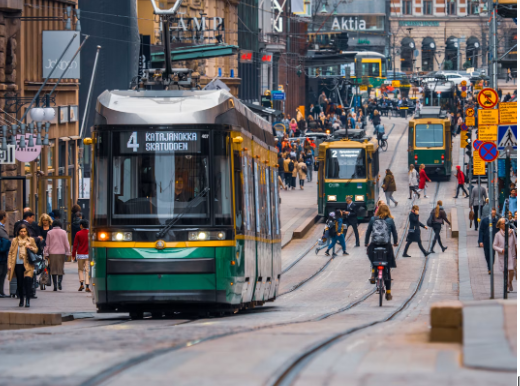
The train can get you from Helsinki to Tampere in no time. But what if the place you want to stop for coffee is a wooden village beside a lake, the viewpoint is somewhere in the middle of a forest, or you suddenly spot reindeer crossing the road? That is when Finland starts making more sense by car.
Finland is a country built for slow travel. Roads disappear into forests, lakes seem to appear around every corner, and some of the most memorable places are far beyond the main railway lines. If you want to experience that side of the country, car hire in Finland gives you something a train timetable cannot: the freedom to decide where the journey takes you.
Helsinki Is Just the Beginning
Helsinki is an easy place to start. Spend a couple of days exploring the waterfront, Suomenlinna, Market Square and the city’s distinctive mix of modern architecture and historic neighbourhoods.
Then leave the capital behind.
Within a short drive, the landscape begins to change. The city gives way to forests, lakes and smaller communities where life moves at a noticeably different pace. You can stop whenever you want, take a detour or simply find a quiet place beside the water and stay there for an hour.
That flexibility is one of the biggest advantages of choosing to rent a car in Finland, particularly if your itinerary includes destinations that are not directly connected by train.
The Finnish Lakeland Experience
If there is one landscape that defines Finland, it may be its lakes.
The Finnish Lakeland stretches across a huge part of the country, with forests, islands and waterways creating endless opportunities for exploration. Cities such as Tampere, Jyväskylä and Kuopio make useful stops, but the real experience often happens between them.
A car allows you to follow smaller roads, visit lakeside villages and reach cabins, viewpoints and hiking areas that would be difficult to combine using public transport alone.
In summer, the long daylight hours make this even more appealing. You can leave after breakfast, explore during the afternoon and still have plenty of daylight for a lakeside walk or dinner outdoors.
Drive Into the Wild
Finland’s national parks are another reason to leave the railway behind.
Nuuksio National Park, close to Helsinki, is an easy introduction to Finnish nature. Further north, destinations such as Oulanka National Park offer forests, rivers, suspension bridges and some of the country’s most spectacular hiking scenery.
With a rental car, you can build your journey around nature rather than treating it as a day trip squeezed between city stops. Pack your hiking shoes, keep the camera nearby and allow enough time to take the scenic route. AddCar Rental makes it easy to pick up a car and set off whenever you are ready.
And in Finland, scenic does not necessarily mean dramatic. Sometimes the view is simply a road disappearing between tall pine trees with a lake flashing through the branches. That quietness is part of the experience.
From Lapland to the Arctic Circle
Then comes the journey north.
Lapland feels like another Finland entirely. Rovaniemi, widely known as the gateway to the Arctic Circle, is a popular starting point, but the further north you travel, the more remote the landscape becomes.
In winter, roads lead through snowy forests and towards destinations such as Levi, Saariselkä and Inari. In autumn, Lapland’s forests turn shades of red, orange and gold during the season known as ruska. In summer, the Midnight Sun keeps the landscape illuminated long after most travellers would expect the day to end.
This is where having your own vehicle becomes particularly useful. Distances are greater, settlements are smaller and attractions are spread across a much wider area. A Finland road trip gives you the freedom to choose where to stop without having to build every day around a departure time.
What About Trains?
Finland has an excellent railway network, and trains remain one of the easiest ways to travel between major cities. Helsinki, Tampere, Turku, Oulu and other urban centres are well connected, making rail travel a sensible option for a city-focused itinerary.
The difference is what happens once you arrive.
If your holiday is mainly Helsinki–Tampere–Turku, you may never need a car. But if your plans involve national parks, lake districts, remote accommodation, countryside villages or several stops across Lapland, driving in Finland gives you considerably more flexibility.
It is not really about choosing cars over trains. It is about choosing the option that matches the Finland you want to see.
Practical Things to Know Before Driving
Finnish roads are generally well maintained, but conditions can change considerably with the seasons. Winter driving requires particular attention because snow, ice and reduced daylight can affect both road conditions and journey times.
If you are travelling in winter, check the forecast before setting out and allow extra time for longer distances. In summer, the opposite problem can occur: long daylight hours make it easy to underestimate how much driving you have planned for one day.
Before collecting your vehicle, check your driving licence, insurance, fuel policy and rental conditions. It is also worth planning accommodation ahead if you are travelling through popular areas during peak season.
The Freedom to Take the Long Way
A train journey is measured by stations. A road trip is measured by everything that happens between them.
That might mean stopping beside a lake, finding a tiny café in a village, taking a forest trail or simply pulling over because the landscape looks too good to drive past.
That is the real reason to choose car hire in Finland. Not because trains cannot take you there, but because a car lets you discover the places that were never on the timetable.
From Helsinki to the Lakeland region and all the way to the Arctic Circle, Finland rewards travellers who leave a little space in their plans.
And sometimes, the best part of the journey is simply taking the next road and seeing where it leads.