

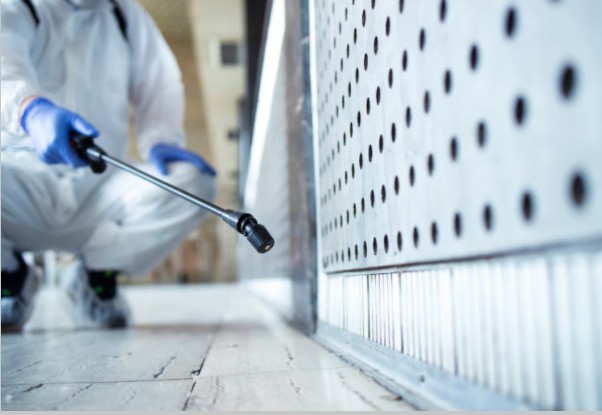
Tampa’s warm, humid climate keeps pests active almost all year. Termites swarm in the spring, ants follow every summer storm, roaches settle into kitchens, and rodents move in whenever the weather shifts. Many homeowners assume a single spray handles all of it.
In practice, each of these pests has its own habits, and the treatment that works for one can do nothing for another. Professionals start by working out which pest is involved and how it is getting in. Then they match the method to the target. That matching step is the part most do-it-yourself efforts skip.
This article will discuss how local exterminators approach termites, ants, roaches, and rodents, one step at a time.
- Starting With A Thorough Inspection Of The Property
It is best to hire an experienced local company in the first place, as the technician will know where Florida pests tend to hide. Technicians will look for droppings, mud tubes, trails, and moisture in your home’s foundation, attic, crawl space, kitchen, garage, and landscaping. This assessment determines what kind of pest it is and what kind of treatment should be used.
By skipping this stage, you will be wasting your money, as the spray for the wrong pest will not eliminate the actual pest that causes problems. Having a report in writing will also allow the homeowner to know what was found during the inspection.
Choosing one of the local Tampa pest exterminators means the inspection and treatment plan accounts for Florida’s humidity, heavy summer rains, and year-round pest pressure. That local experience cuts down on guesswork and keeps results steady from one season to the next.
- Treating Termites With Baits Or Barriers
Termite control gets special consideration compared to all other pests since the damage takes place inside the wooden structures. First of all, it is necessary to establish the kind of termite, as subterranean and drywood termites require different treatment.
Subterranean termites can be controlled with the help of a liquid barrier created in the soil surrounding the structure and with bait stations installed around the perimeter. As for drywood termites, they are treated with targeted application or with whole-structure fumigation.
The selection of the method is more significant than one may think. According to a study conducted by the University of Florida, liquid termiticides eliminate termites near the treated soil while not affecting the entire colony, whereas baits are brought back to the nest. Therefore, baits are preferred where there is a large colony, while barriers are selected where baiting is impossible.
- Eliminating Ants At The Colony Level
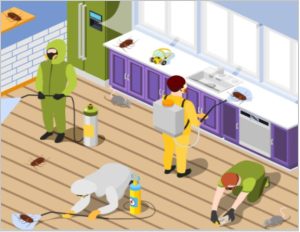
Ants are treated at the nest because the workers on the counter are only a small part of the colony. Technicians use slow-acting baits that foragers carry back to the queen and the brood. Spraying visible trails can break up a line of ants for a day, but the colony sends out more.
Placement and patience matter here. Bait goes along trails and near entry points, and exterminators often ask homeowners to leave the ants alone for a few days so the bait can spread. Sealing cracks and trimming vegetation back from the walls cuts down on the routes ants use to get inside.
- Controlling Roaches With Baits and Sanitation
Gel baits are used against the roaches in the cracks, underneath appliances, and behind the sinks where the pests like to spend their daytime in hiding. Bait is effective since the roaches feed on it and affect other roaches in the group. In addition, the technician can use an insect growth regulator to prevent the nymphs from developing into adults.
Half the battle is won with sanitation. Leaks should be fixed, grease cleaned up, and all food stored in closed containers, as roaches cannot stay where there is no source of food and water. Besides, the roaches that come from the outdoors, like the American cockroach, also require an exterminated perimeter outside the house.
- Keeping Rodents Out With Exclusion And Trapping
Rodent work centers on getting the animals out and keeping them out. Technicians seal gaps around pipes, vents, rooflines, and garage doors, then set traps along the walls where rodents travel. Sealing comes first, because trapping alone only clears the way for new rodents to move in.
The health stakes make this more than a nuisance issue. The CDC says that infestation of rodents in and around the home is the main reason disease spreads from rodents to people, which is why cleanup of droppings and nesting material is part of the job. In Florida, roof rats often nest in attics and in trees near the house, so technicians also trim branches that touch the roof.
- Following Up To Confirm The Problem Stays Solved
A single visit rarely finishes the job. Technicians return to check bait stations, inspect traps, and look for new activity around the entry points they treated.
Catching a small flare-up early costs far less than treating a full infestation. Notes from each visit also help the technician spot patterns, such as the same entry point failing twice.
Many companies also offer recurring service on a quarterly or bimonthly schedule. In Tampa’s climate, regular visits keep a protective perimeter in place through the rainy season, when pest pressure is highest.
Bottom Line
Each pest gets its own plan: baits or barriers for termites, colony baiting for ants, gel baits and sanitation for roaches, and sealing plus trapping for rodents. What ties them together is an inspection at the start and a follow-up at the end.
That mix of identification, targeted treatment, and monitoring is what separates a lasting fix from a spray that only hides the problem for a few weeks.