

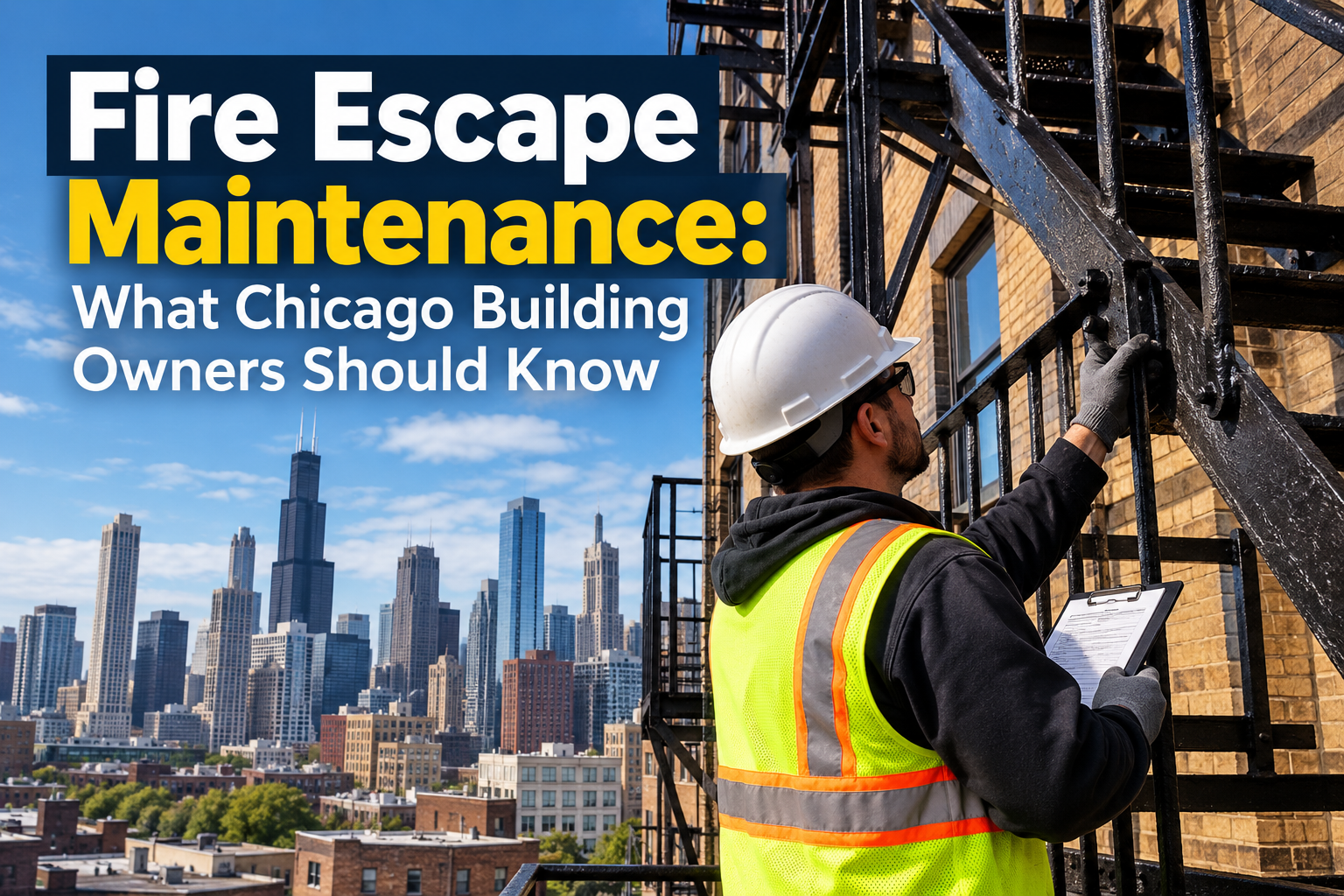
Chicago is full of older multi-unit buildings with exterior fire escapes, and for the owners of those buildings, the fire escape is easy to forget until something forces the issue. A tenant complaint, an insurance review, or a city inspection can turn a rusting stairway into an urgent expense. Staying ahead of that is far less costly than reacting to it.
Rust Is the Main Enemy
A fire escape lives outdoors through every Chicago winter. Snow, road salt, freeze-thaw cycles, and standing water all attack the steel. Surface rust on its own is not an emergency, but left alone it works into the metal and eats away at the structure. The parts that matter most are usually the least visible: the connections where the fire escape attaches to the building, the stair treads and their supports, and the underside of landings.
Signs a Fire Escape Needs Attention
- Flaking, bubbling, or peeling paint, especially near joints and welds.
- Rust that leaves behind pitting, scaling, or holes rather than a thin orange film.
- Treads or landings that feel soft, loose, or that flex under weight.
- Loose or missing bolts, cracked welds, or gaps where the structure meets the masonry.
- A drop ladder or counterweight that no longer moves freely.
- Railings that wobble or are missing sections.
Violations Are Worth Avoiding
When a fire escape falls into disrepair, it can trigger a code violation, and violations tend to arrive with deadlines attached. Correcting the problem under a compliance timeline usually costs more than routine upkeep, and it can complicate insurance or a property sale. It also carries real risk, since a fire escape that cannot be used safely defeats its entire purpose.
Build Maintenance Into Your Schedule
A practical approach is to look the structure over twice a year, in spring and in fall, and to keep a record of what you find. Clear debris and standing water from landings, keep drop ladders operable, and address rust before it spreads. Paint is not cosmetic on a fire escape. A properly prepared and coated surface is the barrier that keeps moisture off the steel, which is why repainting on a regular cycle extends the life of the whole structure.
Repairs and repainting on this kind of structure call for a contractor who works on fire escapes specifically, not a general painter. In Chicago, Americana Iron Works & Fence has handled fire escapes, custom ironwork, and metal painting since 1993 and is licensed, bonded, and insured, which matters when the work involves a life-safety structure attached to an occupied building.
Final Thoughts
A fire escape is a piece of safety equipment that happens to be made of steel and left out in the weather. Inspect it on a schedule, keep the coating intact, and repair small problems while they are still small. That approach protects your tenants, your budget, and your building.