

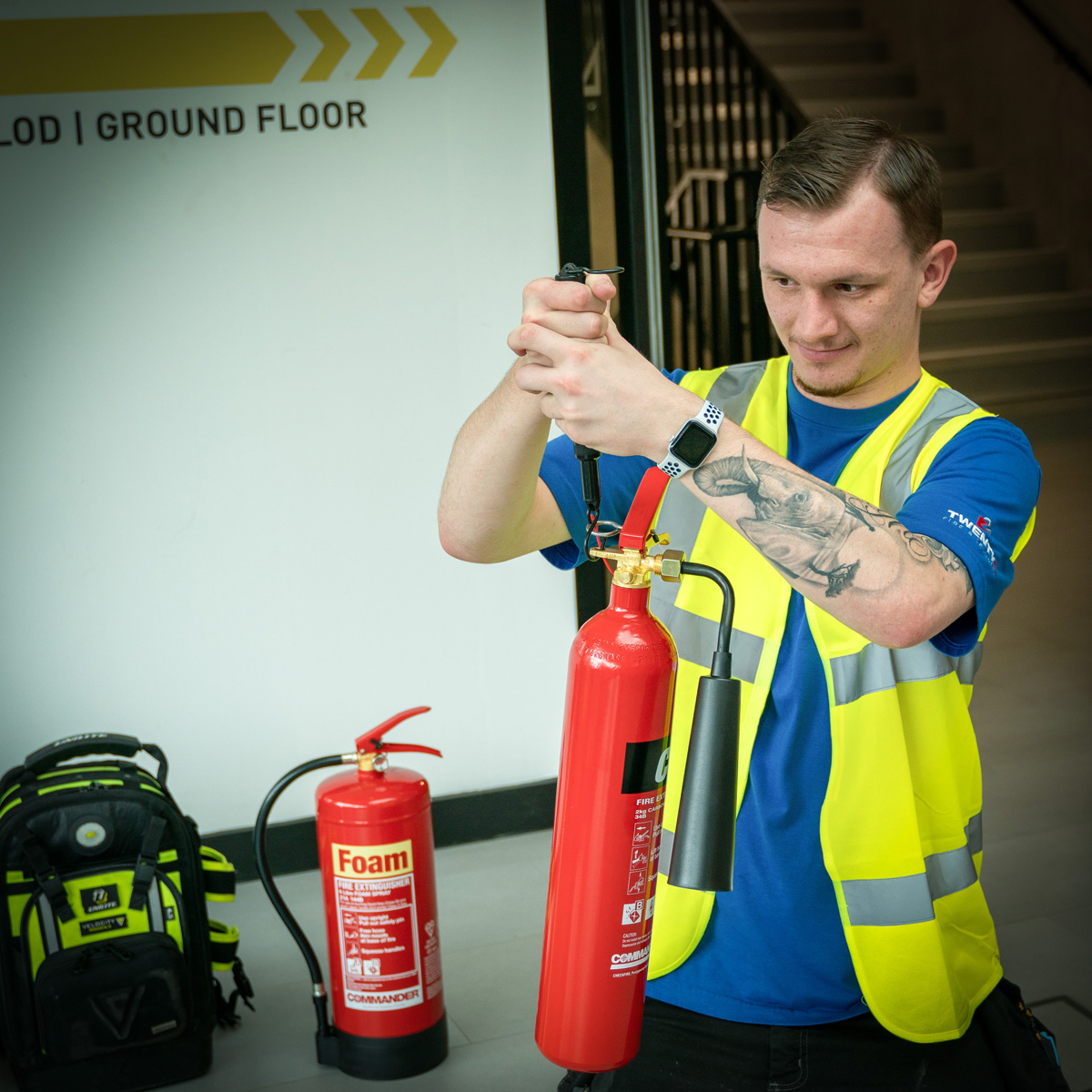
Fire extinguishers are the most familiar piece of fire protection equipment and the most commonly mishandled. They hang on a wall for years, get glanced at during a walkthrough, and are assumed to be ready. Compliance actually involves three separate routines, and most businesses are only doing one of them.
The Three Routines
Monthly visual checks are done in house. Someone on staff confirms the extinguisher is in its place, unobstructed, visible, undamaged, and showing pressure in the correct range. This takes minutes and is typically recorded on the tag or in a log.
Annual inspections are performed by a qualified service provider. The extinguisher is examined more thoroughly, serviced as needed, and tagged with the date. This is the step inspectors look for first.
Hydrostatic testing happens on a longer cycle that depends on the type of cylinder. The extinguisher is emptied and pressure tested to confirm the cylinder itself is still sound. Missing this step means an extinguisher that looks current can still be out of compliance.
Common Mistakes
- Blocked access. An extinguisher behind boxes or a cart is treated as unavailable.
- The wrong class for the hazard. A commercial kitchen needs a Class K unit on the cooking line, and electrical or chemical areas have their own requirements.
- Too few units, or units too far apart. Travel distance requirements apply and vary by hazard classification.
- Improper mounting height, or units sitting on the floor rather than mounted.
- Missing documentation. If the tag and records are not there, the inspection effectively did not happen.
- No staff training. An extinguisher only helps if someone present knows how and when to use it, and when to evacuate instead.
Build It Into a Routine
The businesses that never have a problem tend to assign the monthly check to a specific role rather than to everyone in general, keep a simple log in a predictable place, and schedule annual service in advance instead of reacting to an expired tag. Track your hydrostatic dates too, since those are easy to lose over the life of a cylinder.
When to Call a Professional
Call immediately if an extinguisher has been discharged, even briefly, or if the gauge reads outside the normal range, the pin or seal is missing, or the cylinder shows dents, corrosion, or a damaged hose. Do not put a used extinguisher back on the bracket.
A good provider will inspect, tag, and service your units and give you a clear list of what needs correction. In Wyoming, for instance, Crimson Fire Protection sells, inspects, and services extinguishers for commercial and industrial facilities from its base in Casper.
Final Thoughts
Requirements vary by occupancy and jurisdiction, so confirm the specifics with your service provider and local fire authority. The principle stays the same: right unit, right place, unobstructed, and documented.