

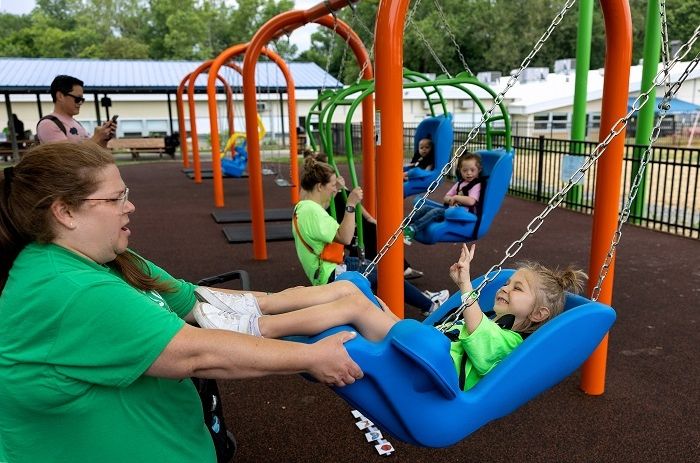
Inclusive communities are built through everyday places where people feel welcome, respected, and able to participate. Play spaces are among the most important of these places. Thoughtfully planned playground equipment supports physical activity, social connection, confidence, and shared experiences for children, caregivers, and community members of many abilities.
Why Inclusive Play Matters
Play is not only recreation. It helps children develop balance, coordination, communication, problem-solving, and emotional resilience. When play areas are designed for a wider range of users, more children can take part in these developmental benefits alongside their peers.
Inclusive play also supports families and caregivers. A welcoming playground gives adults a comfortable place to gather, supervise, and connect. This strengthens neighbourhood relationships and helps reduce isolation, especially for families with children who may face barriers in traditional play settings.
Designing for Different Abilities
Inclusive playgrounds consider mobility, sensory needs, social comfort, and developmental differences. Accessible routes, transfer points, ground-level activities, and varied challenge levels allow children to choose play experiences that feel enjoyable and manageable.
Good playground equipment offers more than one way to play. A child may climb, spin, slide, balance, swing, build, observe, or engage in imaginative play. Multiple options help children participate according to their abilities, interests, and comfort levels.
Physical Access and Movement
Accessible surfacing and clear pathways allow more users to move through the space. Ramps, wide routes, and supportive seating can help children using mobility devices, as well as caregivers pushing strollers or supporting young children.
Inclusive movement does not mean removing challenge. It means providing a range of difficulty levels. Some children benefit from gentle rocking or supported swinging, while others seek climbing, balancing, and active motion. A well-planned site includes both.
Sensory-Friendly Features
Children experience sound, texture, movement, and light differently. Sensory-friendly playground features can include tactile panels, quiet areas, musical elements, shaded spaces, and equipment that supports calm movement. These features make play more comfortable for children who may feel overwhelmed in busy environments.
Quiet zones are especially valuable. They give children a place to pause without leaving the playground entirely. This supports emotional regulation and helps children rejoin play when they are ready.
How Playgrounds Encourage Social Connection
Inclusive playgrounds create natural opportunities for children to meet, cooperate, and communicate. Shared activities such as group spinners, imaginative panels, sand play, and cooperative games encourage interaction without forcing it.
Social inclusion is strongest when children can play near one another, even if they are using equipment differently. A child on a ground-level activity panel can interact with another child on an adjacent climbing structure. This proximity helps friendships form through shared experience.
- Open layouts improve visibility and help caregivers support safe social interaction
- Group activities encourage cooperation and turn-taking
- Varied play zones support both active and quiet engagement
- Seating areas help families remain connected to the play environment
Planning Play Spaces With Community Needs in Mind
Effective planning begins with understanding who will use the space. Children, caregivers, educators, health professionals, and accessibility advocates can all provide useful perspectives. Their input helps identify barriers that may not be obvious during early design discussions.
Budget planning is also important. Many communities explore playground equipment grants to support accessible and inclusive upgrades. Funding considerations can influence surfacing, seating, shade, pathways, and equipment selection.
Playground equipment grants can help communities prioritize long-term value rather than short-term fixes. Durable materials, inclusive layouts, and accessible surfacing often require careful investment, but they contribute to safer and more welcoming public spaces.
Key Features of an Inclusive Playground
An inclusive playground is not defined by one piece of equipment. It is shaped by how the entire environment works together. Access, comfort, challenge, safety, and social opportunity all matter.
- Accessible routes connecting entrances, seating, and play zones
- Ground-level activities for children who do not climb
- Transfer platforms and supportive elements for varied mobility needs
- Shade and rest areas for comfort during longer visits
- Clear sightlines for supervision and confidence
- Play options that support sensory, physical, imaginative, and social development
Building Belonging Through Everyday Play
When playground equipment is planned with inclusion in mind, it becomes more than a set of structures. It becomes a shared community space where children can participate, families can connect, and differences are respected.
Inclusive play areas help communities show their values in a practical way. They support access, dignity, and connection through design choices that make daily life easier and more enjoyable for more people.