

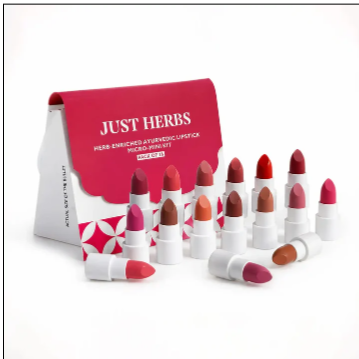
Indian complexions cover a wide spectrum, from fair and light-medium skin to wheatish, olive, dusky and deep tones. Then there are undertones, natural lip pigmentation, lighting and the lipstick’s finish to consider. All these details affect how a shade finally appears.
Choosing an organic lipstick also involves more than picking an attractive colour. The formula, ingredient list, texture and finish matter, especially when you plan to wear it for several hours. Natural oils, botanical extracts and moisturising ingredients may make a formula feel more comfortable, but shoppers should still read the complete label.
Skin Tone Versus Undertone
Skin tone is what you’d call your complexion depth, fair, medium, wheatish, dusky, deep, and so on. Undertone is the underlying colour beneath that, and it doesn’t change with a tan or a season. It stays warm, cool, or neutral no matter how deep or light your actual skin tone gets.
Here’s a simple way to check yours. Look at the veins on the inside of your wrist in natural light. Greenish veins usually mean a warm undertone. Bluish or purplish veins point to cool. If you genuinely can’t tell, or your veins look a bit of both, you’re probably neutral, which honestly is the easiest undertone to shop for since more shades tend to work.
Another quick trick is the jewellery test. Gold generally flatters warm undertones more, while silver tends to sit better against cool ones. If both look equally good on you, that’s neutral again.
Lipstick for Warm Undertones
Warm undertones generally have golden, peachy, or yellow undercurrents in the skin. If that’s you, lipsticks with orange, coral, or brick-based reds tend to look the most natural, almost like they were made for your face rather than layered on top of it.
Terracotta and rust shades work beautifully too, and they’re honestly a bit underrated. A warm brown with orange undertones, rather than a cool, ashy taupe brown, usually reads as more flattering and less flat. If you are looking at Just Herbs’ range, their warmer-leaning shades in the brown and rust families, the kind that show up across both the bullet lipstick and matte liquid formats, tend to sit in this comfortable warm zone.
One thing to avoid if you’re warm-toned: very blue-based pinks and icy mauves. They can look a bit jarring against golden undertones, sort of like they’re fighting your skin rather than working with it.
Shades for Cool and Neutral Undertones
Cool undertones lean pink, red, or bluish beneath the skin. Blue-based reds, berry shades, and cooler mauves tend to look the most natural here. A rich wine or a plum shade, something with a blue-purple base rather than an orange one, generally works really well.
Neutral undertones have it a bit easier, honestly. Because there’s no strong pull toward warm or cool, a wider range of shades tend to work, from dusty rose to soft berry to a classic red that isn’t heavily leaning either warm or cool. If you’re neutral, this is the one time you can actually trust a “goes with everything” shade claim, at least somewhat.
Mauve shades deserve a special mention for both cool and neutral tones. They sit in that in-between zone, not quite pink, not quite brown, and they tend to be one of the more forgiving families across different undertones, which is probably why mauve keeps showing up across so many lipstick collections, Just Herbs included, in both matte bullet and liquid formats.
Nudes for Fair, Medium, Dusky and Deep Skin
Nude is where most shade guides get lazy, and it’s honestly the category that needs the most nuance. A nude that works on fair skin will often look ashy or too pale on deeper skin, and a nude built for deep skin can look muddy or too dark on fair skin. There’s no one nude. There are several, and picking the right one comes down to matching depth first, then undertone.
-
Fair Skin
A light peachy-pink or soft beige nude usually works, as long as it isn’t so pale it disappears into the skin.
-
Medium or Wheatish Skin
Warmer nudes, like a caramel or dusty rose lean, work better than a stark beige, which can look chalky against golden-medium tones.
-
Dusky Skin
A nude with a bit of depth, think toffee, cinnamon, or a warm brown-nude, holds up better than anything too light. A too-pale nude on dusky skin tends to look washed out rather than natural.
-
Deep Skin
Richer nudes with real pigment behind them, espresso, chocolate, or a deep caramel, actually show up as a nude rather than fading into nothing. This is where a fuller-coverage, densely pigmented formula matters more than usual, since a sheer, low-pigment nude often just won’t register properly on deeper skin at all.
Reds, Browns, Mauves and Berries
These four families come up again and again in Indian shade recommendations, and for good reason. They tend to have the flexibility to flatter multiple undertones as long as you pick the right variation within the family.
Reds split into warm (orange-based, brick, tomato-red) and cool (blue-based, cherry, classic red). Almost everyone can wear some version of red. The trick is picking the right lean for your undertone rather than avoiding red altogether.
Browns range from warm chocolate and rust-brown to cooler taupe-browns. Warm-toned skin generally does better with the former, cool-toned with the latter.
Mauves, as mentioned, are genuinely one of the more forgiving shade families and tend to suit a broad range of undertones without much fuss.
Berries, wines, and deep maroons work particularly well on medium to deep skin tones, where their richness complements rather than overwhelms the complexion.
Just Herbs’ collection actually spans most of these families across both bullet and liquid lipstick formats, running from pinks and peaches through browns, mauves, maroons, and violets, so there’s usually more than one option within a family if the first shade you try doesn’t quite land.
The Best Lipstick Shade Is the One You Will Actually Wear
Undertones, colour families and swatch comparisons make online shopping easier, but lipstick remains personal.
You may have warm skin and love a cool plum. You may prefer a bold red for the office and a quiet brown for weddings. None of that is wrong.
Use your undertone as a map, not a rulebook. Check how the lipstick works with your complexion depth, natural lip pigmentation and preferred finish. Then consider the formula. An organic lipstick should offer more than a fashionable label; it should provide clear ingredient information, a wearable texture and a shade that makes sense for you.
Indian skin tones are far too varied for one universal nude or one perfect red. Thankfully, the choice is no longer that limited. With reds, browns, mauves, berries, maroons, peaches and violets now available across bullet and liquid formats, finding your colour is mostly a matter of knowing where to begin.