

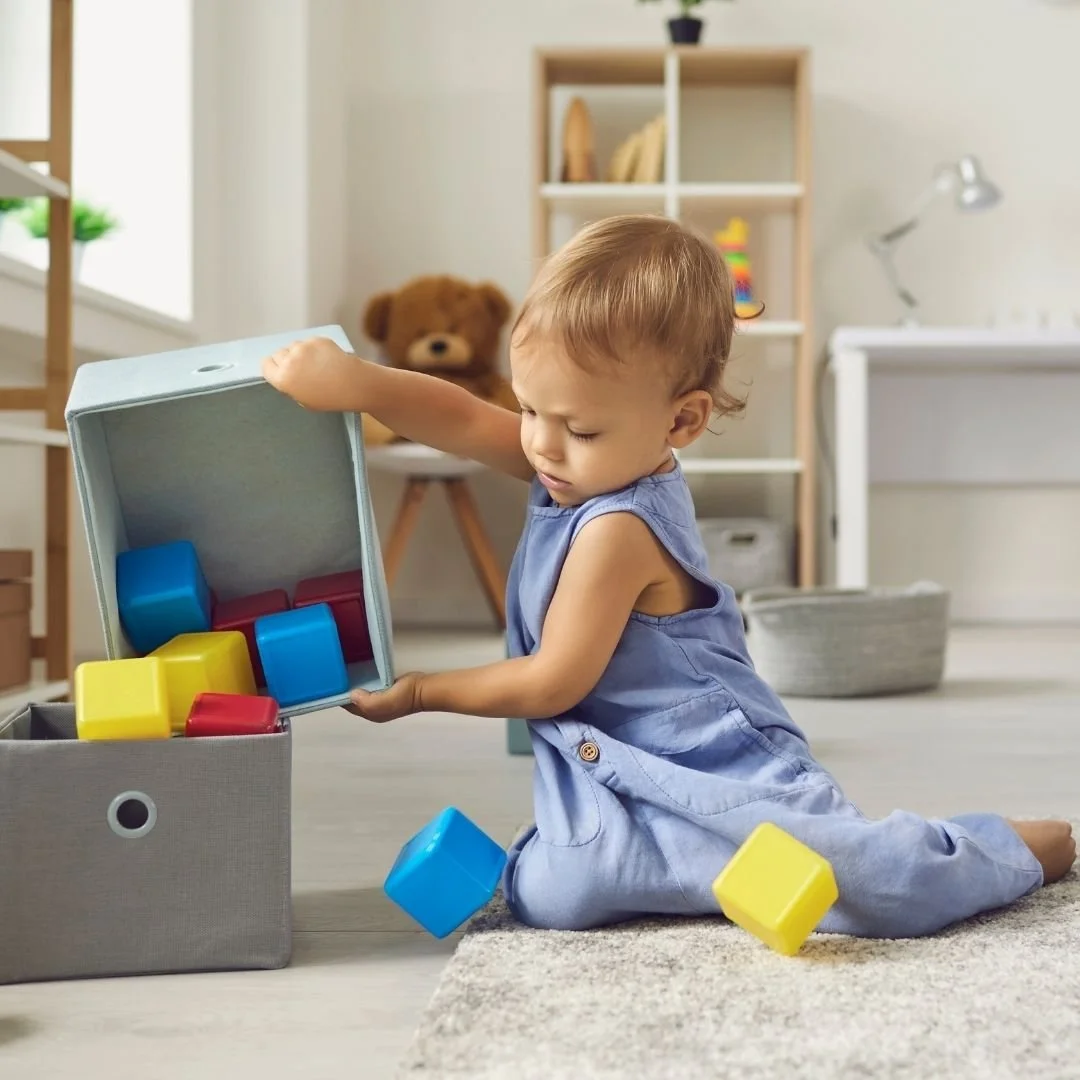
Children’s play spaces become messy through many small activities rather than one large event. Blocks scatter across the floor, crayons leave marks on a table, crumbs work beneath a rug, and favorite toys move from shelves to sofas and back again.
Trying to wash every object whenever the room looks untidy creates far more work than the mess actually requires.
A better approach is to respond to what happened. Loose crumbs need a different response from a sticky toy. Dust on a shelf does not mean every stuffed animal needs laundering. A craft spill calls for attention to the table, not a full-room cleaning session.
Cleaning by mess type keeps the room manageable without repeatedly rewashing items that are already fine.
Separate Toy Pickup From Actual Cleaning
Putting toys away and cleaning the room are two different jobs.
Begin by returning blocks, dolls, vehicles, puzzles, books, and craft supplies to their storage places. This exposes the floor and furniture without requiring each object to be wiped.
Toy pickup also makes it easier to see what actually became dirty.
A useful setup leaves bins and shelves simple enough that toys can return to them quickly. Complicated storage systems often result in more objects staying on the floor.
Once the room is clear, cleaning can focus on the mess underneath rather than on the entire toy collection.
Let Actual Use Decide Which Toys Need Attention
Some toys may be handled every day while others sit untouched for weeks.
Treating them all the same creates unnecessary work.
A favorite set of blocks that travels between the floor, table, and snack area may need occasional wiping. A decorative toy on an upper shelf probably does not need the same frequency.
Toy bins that are returned to their usual places also leave CJM Cleaning clearer access to flooring, low shelving, and furniture edges without turning the visit into a toy-sorting session.
The frequency should follow actual handling and visible dirt, not the number of toys in the room.
Match Cleaning to the Material
Hard plastic, painted wood, fabric, books, and battery-powered toys all behave differently.
A washable plastic item may tolerate a damp wipe, while a wooden puzzle can be damaged by too much water. Books generally need dry care, and electronic toys should not have liquid introduced around battery compartments, buttons, or speaker openings.
Read care instructions when they are available.
There is little benefit in creating one universal “toy cleaning” method. It usually leads either to unnecessary washing or to using moisture where it does not belong.
Give the Floor More Frequent Attention Than the Toy Shelves
Most playroom mess eventually reaches the floor.
Crumbs fall, paper scraps scatter, pet hair drifts inward, and small pieces from craft projects collect beneath furniture.
Vacuuming or sweeping these loose materials regularly often improves the room more than washing dozens of toys.
Pay attention to the first few inches beside storage units and beneath lightweight tables, where debris tends to remain after the middle of the floor is cleared.
Rugs may need slower vacuum passes, especially where children regularly sit and play.
Washing soft flooring should depend on spills and condition rather than becoming part of every cleanup.
Keep Food and Craft Messes From Becoming Room-Wide Messes
Snacks, paint, glue, markers, and modeling materials create the messes most likely to spread beyond one object.
A small table or washable mat gives these activities a predictable place to happen.
Crumbs can then be collected from one section instead of discovered later inside toy bins and sofa cushions. Fresh craft marks can be addressed before they dry onto a tabletop.
When food debris, fingerprints, craft scraps, and floor dirt have spread through the room itself, house cleaning services nj can fit naturally into the room-level cleanup while toy washing remains limited to the specific items that actually became soiled.
That distinction prevents a messy afternoon from turning into laundry for every soft toy in sight.
Treat Sticky Toys Differently From Dusty Toys
A toy with a food smear needs a different response from one that simply sat on a shelf.
Deal with sticky marks promptly because they can transfer to hands, rugs, furniture, and other toys.
Dry dust is usually less urgent.
This simple difference can dramatically reduce unnecessary washing. Instead of cleaning every object because one item became messy, isolate the object that needs attention and return to the rest only if they show the same problem.
The same principle works for toy storage containers: clean the section that actually received the spill rather than automatically washing every bin.
Empty Bins Only When the Bottom Tells You To
Toy bins can hide crumbs, small paper pieces, hair, and broken toy parts.
They do not need to be emptied every day.
Every so often, look into the most frequently used containers. If the bottom contains visible debris, remove the toys, vacuum or wipe the container as appropriate, and let it dry before refilling it.
This is also a convenient moment to remove dried markers, damaged pieces, wrappers, or objects that no longer belong there.
A clean bin prevents loose debris from transferring straight back onto toys that were just picked up.
Wash Soft Toys Based on What Happened to Them
Stuffed animals can create an enormous laundry pile if they are cleaned simply because they live in a playroom.
Instead, pay attention to how they are used.
A soft toy carried outdoors, dropped into food, or slept with frequently may need attention sooner than one that stays on a shelf.
Check the care label before washing. Some toys contain electronic components, glued decorations, or fillings that do not respond well to machine washing.
Drying matters just as much. Do not put a soft toy back into storage while the interior remains damp.
Include the Furniture Children Actually Use
Play rarely remains inside the official play zone.
Children move to sofas, ottomans, window seats, and low tables. Toys follow them, and so do crumbs and small pieces of craft material.
Vacuum accessible cushion seams and the floor below nearby furniture when debris appears there.
During a household cleaning visit, CJM Cleaning can address those room surfaces without every removable cushion, toy, or blanket automatically becoming a separate washing project.
That keeps attention on the parts of the room that have actually collected everyday mess.
End the Day With Recovery, Not Rewashing
A short end-of-day routine can keep the space from becoming difficult to manage.
Return toys to bins, throw away obvious scraps, collect cups or dishes, and deal with any fresh spill that should not sit overnight.
If one section of floor has crumbs, clean that section.
There is no reason to wash the entire rug because a few crackers landed beside the table. There is no reason to wipe every toy because one block became sticky.
Small, targeted responses prevent ordinary play from creating a much larger cleaning job.
Let the Mess Set the Workload
A children’s play space is supposed to be used, so some disorder will return quickly.
The room becomes easier to maintain once every mess stops triggering the same response. Loose debris can be vacuumed. Sticky items can be cleaned individually. Fabric pieces can be washed when their actual use calls for it, and shelves or bins can be handled when they visibly need attention.
That approach keeps the space comfortable without making parents repeatedly clean objects that are already fine. The room can stay functional and reasonably tidy while still being a place where children are free to play.