

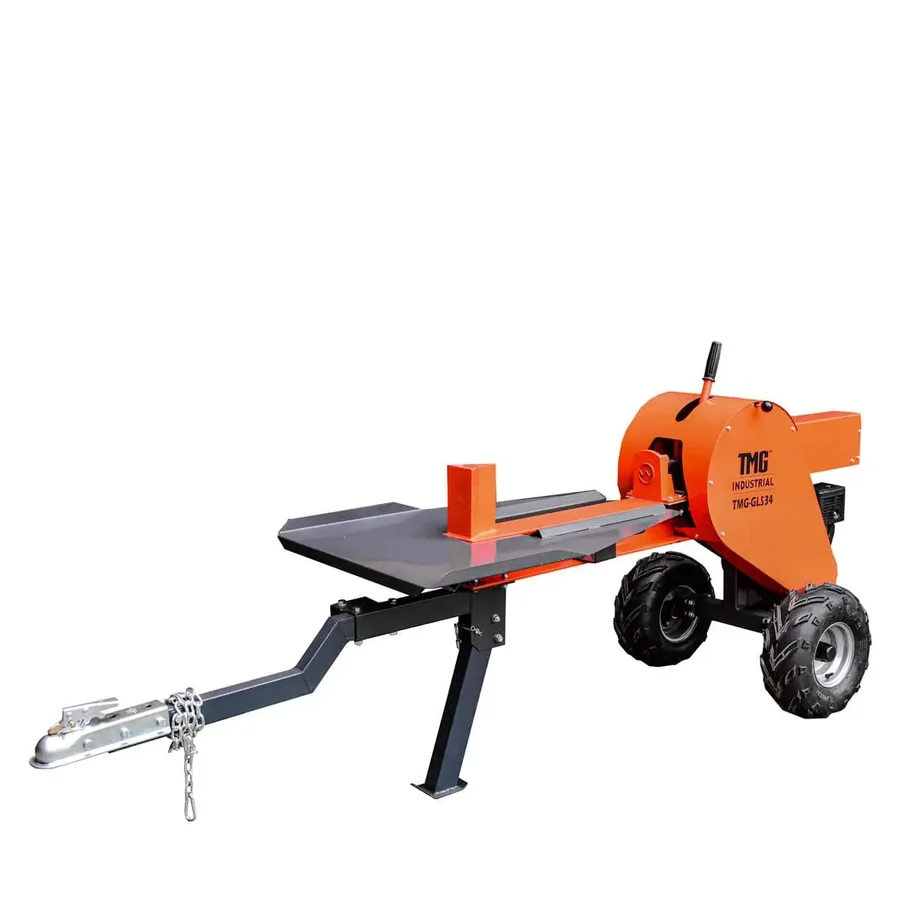
Two machines with the same rating can differ by half a day
Canadian firewood gets processed in late summer so it has a year to dry before it is burned. A log splitter is bought on its tonnage almost every time, and tonnage is a poor predictor of how much wood ends up stacked by evening.
The force a log splitter makes decides whether a round splits at all. Everything else about a day’s output, from how many rounds get through to how tired the operator is, is decided by how long each stroke takes and how much of that time is spent waiting.
How many tons do I need to split firewood, honestly
Straight grained softwood gives way at well under ten tons, and clean hardwood rounds of ordinary size are comfortable somewhere between fifteen and twenty five. Most of the wood most people burn does not require anything close to the top of the range.
The exception is what actually matters. Knots, forks, crotch wood, and elm with interlocked grain will stop a twenty ton machine dead, and every load contains a few, so the question is what happens when the ram reaches one rather than what it does on the easy rounds.
High tonnage buys you not having to back up
A log splitter that stalls has to be retracted, the round has to be turned or rolled off, and the operator starts again from a different angle. That sequence costs a minute or two each time, and on a difficult load it happens often enough to shape the afternoon.
A 34 ton log splitter mostly removes that interruption. The stroke goes through the knot rather than stopping at it, which is worth more over a day than the raw force suggests, because the time saved is the time that was being wasted.
Cycle time is set by the pump and the cylinder, not the rating
The ram advances at a speed determined by how fast the pump can fill the cylinder. A large diameter cylinder produces more force from the same pressure and needs more oil to move the same distance, so higher tonnage often comes with a slower stroke.
That is why two machines rated identically can differ so much in output. A full cycle of fifteen seconds against one of twenty two seconds is a difference of hundreds of strokes over a day, and it never appears in the specification a buyer compares.
The two stage pump is what keeps the fast part fast
A two stage pump delivers a large volume at low pressure while the ram is traveling to the wood, then switches automatically to a smaller volume at high pressure once resistance rises. The approach stays quick and the force is there when the round starts to resist.
A tow behind log splitter for an ATV changes the geometry of the job
Firewood is heaviest before it is split. Moving whole rounds from where the tree fell to a machine parked at the woodshed means handling every piece at its maximum weight, over the worst ground, usually by hand.
Taking the machine to the tree reverses that. Rounds are split where they lie and travel afterward as pieces a person can throw, which removes the loading and unloading of full rounds entirely and is the main saving on any woodlot with a track through it.
Towing behind a quad has its own limits
A machine sized for an all terrain vehicle has a lighter frame and smaller wheels than a highway trailer, and it is meant for bush tracks rather than a road trip. The hitch, lights, and speed rating are worth reading first.
Vertical operation is what saves the operator
A large round can weigh more than a person should lift onto a horizontal beam. Rotating the machine to vertical lets the round be rolled into position and split where it sits, which is the difference between a long day and an injury.
Machines divide by what they are asked to survive
•Under twenty tons: clean straight rounds
•Twenty to thirty: most hardwood, occasional stalls
•Above thirty: knots and crotches without stopping
Where the larger machine pays and where it does not
•Strength: difficult rounds do not interrupt the day
•Strength: goes to the wood rather than the reverse
•Limit: bigger cylinders can mean slower cycles
•Limit: more machine than clean softwood needs
Weighed against a smaller machine, high tonnage costs weight and fuel and returns a day that runs without stopping to reset. A woodlot owner near Pembroke splits at the stump and hauls only finished wood, which halved his handling.
Firewood is being processed where it falls
Rural Canadian owners increasingly bring the machine to the bush rather than the bush to the machine, which has moved towable equipment and vertical operation ahead of raw capacity in how these purchases are compared.
That change in where the work happens is why the outdoor equipment TMG Industrial supplies is built to travel to the job rather than to be fed by everything arriving at it.