

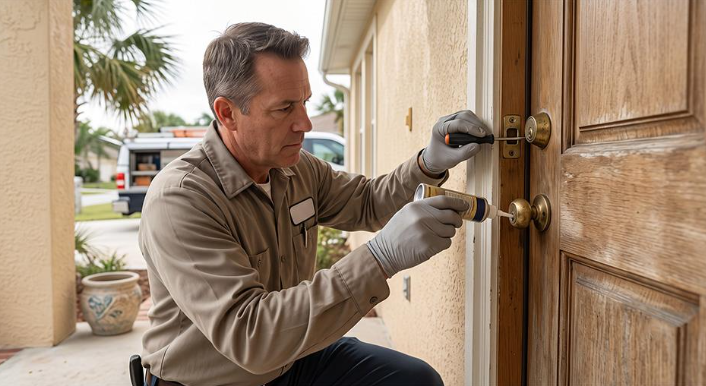
Locks rarely fail without warning. They get stiff, they need jiggling, the key has to be lifted slightly, the bolt drags against the strike. Most people adapt to these small annoyances for months and only call someone the day the lock finally refuses to work. That day almost always comes at the least convenient hour.
Reading the Early Signals
A key that needs force is telling you the pins or the cylinder are wearing. A bolt that drags means the door or frame has shifted, often from humidity and seasonal movement, and the lock is now fighting the strike plate every time it closes. A knob or lever with play in it is loosening at the mounting. None of these are emergencies yet, which is exactly why they are worth handling now. A short visit from a locksmith in Palm Coast resolves each of them cheaply.
Why Coastal Homes Age Faster
Salt air accelerates all of it. Corrosion inside a cylinder is invisible from the outside until the mechanism binds, and humidity swells doors and frames enough to throw alignment off. Homes near the water simply need their hardware looked at more often than the manufacturer’s generic guidance suggests, and lubrication with the correct product rather than a household spray makes a real difference in service life.
The Cost Comparison Is Not Close
Adjusting a strike plate, servicing a cylinder, or replacing a worn lock on your own schedule is routine work at a predictable price. The same problem handled after a failure means an urgent call, possible damage to the door, and time spent locked out. The team at Lockey Locksmith would rather handle the small version, and homeowners who call early consistently spend less.
Stiff keys and dragging bolts are not quirks to live with; they are notice. Acting on them while they are minor is the difference between a scheduled appointment and standing outside your own door waiting for help.