

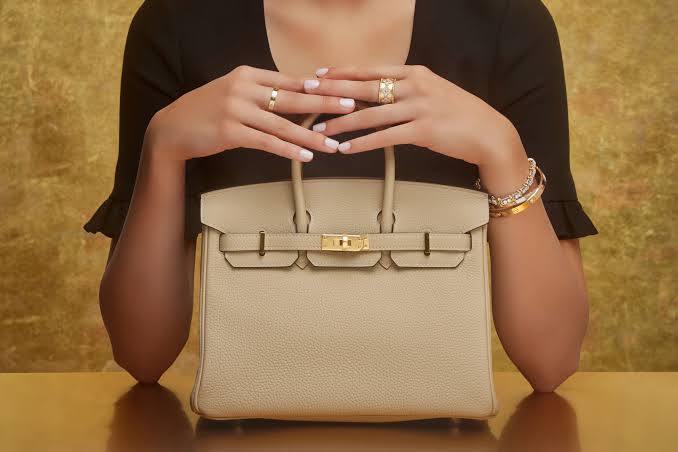
If there’s anything that makes Hermès bags truly Hermès, it’s the detailed and beautiful craftsmanship. Of course, a major aspect of that craftsmanship is the choice of materials. Most iconic Hermès bags are made from leather, and the brand has a history of sticking to a few specific leathers over the years.
Whether you prefer the classic elegance of Togo leather or opt for something lush like Chèvre leather, each material brings its own personal touch to a Hermès handbag. In this guide, we’ll tell you about the various leathers Hermès uses for their bag and how the choice makes a difference.
Hermès Togo Leather
Hermès Togo leather is known for its unique pebbled grain and matte finish, perfect for those casual Birkins and Kellys. It’s a connoisseur favourite and often confused with Clemence leather, which has a similar pebbled grain. But if you take a closer look, you’ll see that Togo leather is lighter and thinner.
The natural pebbled grain of Togo leather makes it perfect for casual handbags like the Kelly Retourne or the Birkin. We wouldn’t say it’s suitable for a fancier design like the Kelly Sellier.
Togo leather has its fair share of upsides. For instance, it’s a lot more durable, so it’s less likely to show scratches and much easier to care for. However, we’ve noticed that Hermès bags made with Togo leather tend to slouch over time.
Hermès Clémence Leather
You may have seen Clemence leather also referred to as Veau Taurillon Clemence or simply TC. Hermès first introduced this leather to its luggage lineup in 1992, so you can definitely count on its durability.
The texture is a bit like Togo leather, with a prominent pebbled grain and semi-matte finish, but you’ll notice that it’s heavier and slouchier. Since it has a naturally slouchy feel, Clemence leather is a better choice for Birkin bags rather than Kellys.
Once again, the pebbled grain makes it scratch-resistant and durable, but the leather still has a very soft finish. However, this type of leather can also make the bag heavier than most and stains easily, even with water.
Hermès Box Calf Leather
Also known simply as Box, Hermès Box Calf Leather has quite the history. It’s one of the original Hermès leathers, dating back to the fashion house’s origins in the 1890s. Back then, it was used for durable equestrian gear like riding saddles and rigid trunks before showing up in handbags and luggage.
It has a super-fine grain with a signature smooth, glossy sheen – distinct from other classic leathers like Epsom and Togo. You’ll most commonly find Box Calf leather in structured vintage Hermès bags, such as the Kelly Sellier.
One thing we really love about Box Calf is that it holds its shape very well over time, which is why it’s fortunate that many vintage Hermès bags are made from It. However, it is pretty prone to scratches and can even blister when wet.
Hermès Epsom Leather
Epsom leather is another true classic. It’s heat-printed, and for those who don’t know what that means, it’s basically embossed. It also features a cross-hatched fine grain, which makes the leather a bit more rigid.
This stiffness makes it great for structured Hermès handbags, especially mini versions like the Mini Kelly. It holds its shape well over time and is easy to care for, all while being super lightweight. This no-fuss leather is also more water-resistant than most other Hermès bags and less likely to show scratches.
Hermès Swift Leather
This is currently one of the most popular Hermès leathers, especially because of its classic feel and style. When first introduced in the 80s, it was called Gulliver and eventually discontinued in 1999. However, it was reintroduced in 2005 as Swift leather and became a huge part of early 2000s fashion.
Its grain is naturally fine and has a matte finish, allowing it to display vibrant colours boldly. In fact, that’s one of the main selling points of Swift leather.
Hermès Evercolor Leather
If you want a middle ground between the ultra-smooth finish of Box Calf and the pebbled grain of Togo and Clemence leather, this is the Hermès leather for you.
Evercolor leather has a fine-printed grain with a stain finish and slight sheen. These features make it a perfect choice for more formal Hermès bags like the Kelly, Constance, and Lindy. When it was first introduced, Evercolor leather was most commonly used for small leather goods.
Today, it’s earned its spot as a favourite choice for two of the most popular Hermès bags: the Kelly and the Constance. While it’s a pretty durable leather in terms of scratch resistance, it will soften and fade over time when exposed to prolonged sunlight.
Hermès Chèvre Leather
Then, there’s Chèvre leather, also sometimes known as Chèvre Mysore. It’s considered one of the most durable Hermès leathers, being scratch-resistant and staining less easily than others.
However, this leather does not show up frequently in Hermès’ lineup, at least not externally. While it has been historically used for the interior lining of most Birkin and Kelly bags, Chèvre leather began showing up in full exteriors around the 90s. Today, the Constance and some variations of the Kelly and Birkin feature Chèvre (goat) leather, which can explain its higher price point.
Hermès Madame Leather
Madame leather is pretty similar to Epsom in its texture. However, since it’s stamped instead of heat-pressed, it has a noticeably softer feel and finer grain. What we really love about this leather is its suitability for structured bags like the Retourne variations of the Birkin and Kelly.
If you like the structured and grainy look of Epsom leather but want a softer finish, we’d recommend going for Madame leather. It also has a slight sheen, which gives it a formal look.
Conclusion
If you’re a Hermès bag collector, you probably know that the leather choice can make a huge difference. The right leather depends a lot on the bag itself, its colour, and its structure. Most importantly, it depends on the kind of finish you’re looking for and how you plan on using the bag.
Each Hermès has its own unique appeal, with Box Calf being a better choice for vintage bags and Togo standing out with its pebbled grain. If we had to pick just one, we’d never be able to!