

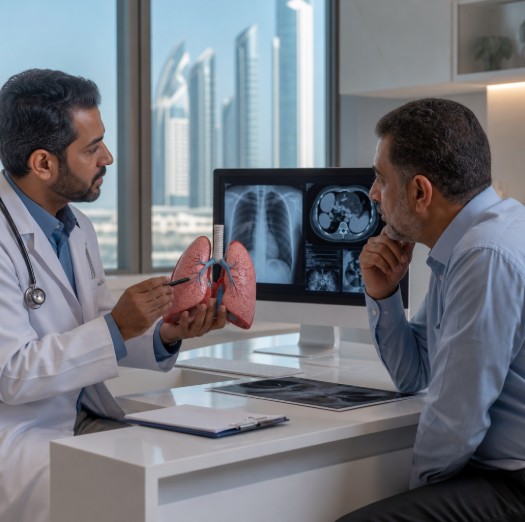
For patients living with end-stage lung disease, a lung transplant can represent the difference between a life severely limited by breathlessness and one restored to meaningful function. As the UAE continues to develop its medical infrastructure, Abu Dhabi has emerged as a credible destination for complex pulmonary procedures. Understanding the full scope of what a lung transplant involves — from candidacy evaluation to post-operative recovery — is essential for patients and their families navigating this life-altering decision.
Understanding End-Stage Lung Disease and When Transplant Becomes Necessary
Lung disease progresses along a spectrum. Conditions such as chronic obstructive pulmonary disease (COPD), idiopathic pulmonary fibrosis, cystic fibrosis, and pulmonary arterial hypertension can reach a stage where conventional medical therapies — bronchodilators, oxygen therapy, anti-fibrotic medications — are no longer sufficient to maintain quality of life or prevent further deterioration. At this point, transplantation becomes a medically appropriate consideration.
The decision to pursue a transplant is never taken lightly. Physicians assess a patient’s lung function through spirometry, six-minute walk tests, and imaging studies. They also evaluate the rate of disease progression, frequency of hospitalizations, and the patient’s overall physiological resilience. A transplant is recommended when the risk of dying from the underlying disease within two years exceeds the risk associated with the surgery and its aftermath.
Who Is a Suitable Candidate?
Candidacy for lung transplantation is determined through a rigorous multidisciplinary evaluation. Suitable candidates are typically between 18 and 65 years of age, though exceptions exist. They must demonstrate adequate cardiac function, absence of active malignancy, no significant dysfunction in other major organs, and a strong psychosocial support system. Smoking cessation — typically for at least six months prior — is a non-negotiable requirement. Patients with poorly controlled infections, severe obesity, or significant psychiatric conditions may be excluded from consideration.
The Transplant Process: From Listing to Surgery
Once a patient is approved as a transplant candidate, they are placed on a waiting list. The waiting period varies considerably depending on blood type, body size, geographic location, and the availability of compatible donor organs. During this waiting period, patients are closely monitored and may require hospitalization if their condition deteriorates rapidly. Some patients receive a single lung transplant, while others — particularly those with cystic fibrosis or bronchiectasis — require bilateral transplantation.
The surgery itself is performed under general anesthesia and typically lasts between six and twelve hours. The diseased lung or lungs are removed and replaced with the donor organ. In many cases, cardiopulmonary bypass is used to support circulation during the procedure. The technical complexity of the operation demands a highly experienced surgical team with specialized training in thoracic surgery and transplant medicine.
Immediate Post-Operative Care and ICU Recovery
Following surgery, patients are transferred to an intensive care unit where they are mechanically ventilated until they can breathe independently. The early post-operative phase is critical. Complications such as primary graft dysfunction — where the transplanted lung does not function optimally immediately after transplant — can occur and require prompt intervention. Infection risk is elevated due to immunosuppressive medications, and patients are monitored closely for signs of rejection, pneumonia, and other respiratory complications.
Long-Term Management: Immunosuppression and Ongoing Monitoring
Lung transplant recipients must take immunosuppressive medications for the rest of their lives to prevent the immune system from attacking the donor organ. This lifelong regimen typically includes a combination of calcineurin inhibitors, antiproliferative agents, and corticosteroids. While these medications are essential for graft survival, they also increase susceptibility to infections and certain cancers, making regular follow-up appointments indispensable.
Patients benefit enormously from structured post-transplant care programs that integrate pulmonology, infectious disease, nephrology, and rehabilitation services. Infusion care services play an increasingly important role in this phase, allowing patients to receive intravenous medications and therapies in a controlled clinical setting without requiring repeated hospital admissions. This approach supports both physical recovery and overall wellness during the months and years following transplantation.
Pulmonary Rehabilitation After Transplant
Rehabilitation is a cornerstone of post-transplant recovery. Structured exercise programs help patients rebuild muscle strength, improve cardiovascular endurance, and adapt to their new lung function. Respiratory physiotherapists work alongside transplant teams to design individualized programs that progress gradually. Patients who engage consistently with rehabilitation tend to achieve better functional outcomes and report higher satisfaction with their quality of life in the years following surgery.
The Importance of Patient-Centered Communication in Transplant Care
One dimension of transplant care that is often underappreciated is the quality of communication between patients and their medical teams. Research has consistently shown that patients who feel heard and respected by their physicians are more likely to adhere to complex treatment regimens, report concerns early, and experience better outcomes. According to research from Johns Hopkins Bloomberg School of Public Health, patients who do not feel heard by their doctors are at greater risk of disengaging from care — a particularly dangerous outcome in the context of transplant medicine, where vigilance and compliance are critical.
Transplant centers that prioritize open dialogue, shared decision-making, and culturally sensitive communication create environments where patients feel empowered rather than overwhelmed. This is especially relevant in a diverse, multicultural city like Abu Dhabi, where patients may come from a wide range of linguistic and cultural backgrounds.
Cleveland Clinic Abu Dhabi: A Trusted Center for Lung Transplantation
For patients in the region seeking world-class care, Cleveland Clinic Abu Dhabi offers a comprehensive transplant program backed by the expertise and protocols of one of the world’s most respected medical institutions. Patients considering lung transplant abu dhabi will find a multidisciplinary team that includes transplant pulmonologists, cardiothoracic surgeons, transplant coordinators, and rehabilitation specialists working in close collaboration. The program adheres to internationally recognized standards and provides patients with access to advanced diagnostic tools, surgical expertise, and long-term follow-up care — all within a facility designed to meet the highest benchmarks of patient safety and clinical excellence.
Why Location and Institutional Expertise Matter
Choosing where to undergo a lung transplant is one of the most consequential decisions a patient will make. Volume matters — centers that perform more transplants tend to have better outcomes due to accumulated experience and refined protocols. Equally important is the availability of comprehensive support services, including social work, nutritional counseling, mental health support, and patient education programs. Proximity to family and familiar surroundings also plays a meaningful role in recovery, making a high-quality regional option particularly valuable for patients in the Gulf region.
Conclusion: Informed Decisions Lead to Better Outcomes
A lung transplant is not a cure — it is a treatment that exchanges one set of medical challenges for another, with the goal of extending life and improving its quality. Patients who approach this journey with a clear understanding of the process, realistic expectations, and a strong relationship with their care team are best positioned to thrive. As Abu Dhabi continues to strengthen its position as a regional hub for advanced medical care, patients with end-stage lung disease have more reason than ever to explore their options close to home, supported by institutions with the expertise and infrastructure to guide them through every stage of this complex journey.