

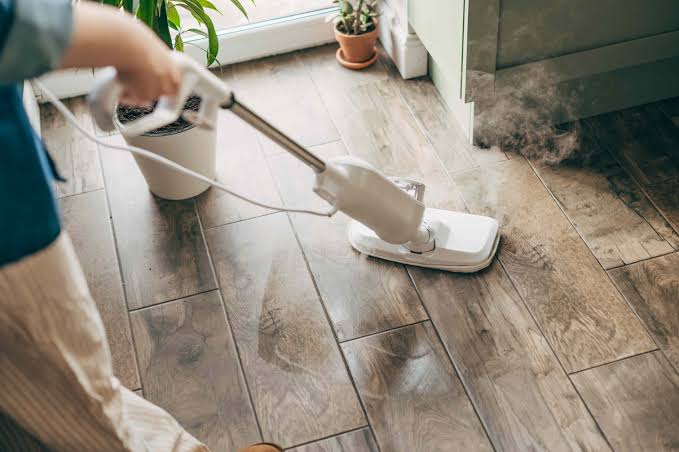
Floors often receive the most attention during cleaning because they show debris so clearly.
Crumbs stand out on dark tiles. Hair gathers against baseboards. Grit becomes noticeable underfoot. A freshly vacuumed carpet or clean hard floor can change the appearance of an entire room.
Yet the floor is also the final destination for much of what happens above it.
Dust falls from shelves. Crumbs drop from counters. Hair leaves upholstery. Debris gets pushed off tables while they are wiped. Even moving objects during cleaning can send particles downward.
That means cleaner floors often begin with a simple change in order: handle the sources above them first.
A Floor Records Activity From the Whole Room
Floor debris does not come only from shoes.
Consider everything positioned above a living-room floor.
There may be a sofa shedding fibers, a coffee table collecting crumbs, shelves holding dust, plants dropping small pieces of soil, and windowsills gathering fine particles.
The floor catches material from all of them.
Cleaning it without looking upward addresses the destination but not the source.
A better first step is identifying which surfaces are feeding debris into the floor below.
Tables Create Their Own Drop Zones
Dining tables are an easy example.
Crumbs rarely remain neatly on the tabletop. They fall between chairs, collect around table legs, and land beneath the edges where people sit.
If the floor is vacuumed before the table is cleaned, wiping the tabletop afterward can undo part of the work.
Clean the upper surface first.
Check chair seats and edges next.
Then move or reposition the chairs as needed before finishing the floor underneath.
The order follows gravity instead of working against it.
Kitchen Counters Feed the Floor Below
Kitchen floors often collect the consequences of work performed several feet higher.
Food preparation creates crumbs. Packaging sheds small pieces. Ingredients spill. Wiping the counter may push loose debris toward the edge.
Look at the strip of floor directly beneath the busiest work areas.
It often needs more attention than a quiet section beside an unused cabinet.
This is why counter cleaning should usually happen before final floor care.
Once the work surfaces have stopped producing debris, the floor can be finished without immediately needing another pass.
Shelves Release Dust When Disturbed
Shelving presents a quieter version of the same pattern.
Dust may sit undisturbed until books, decorative pieces, or storage containers are moved.
Once cleaning begins, particles can fall onto furniture or flooring below.
Start at the highest safely reachable section and work downward.
There is little benefit in vacuuming beneath a bookcase first if several dusty shelves are about to be handled.
The same idea applies to entertainment units, window ledges, and storage furniture.
Finish the lowest surface last.
Upholstered Furniture Affects More Than the Seating Area
Sofas and chairs can contribute hair, fibers, crumbs, and dust to nearby flooring.
Material often gathers along the front edge, beneath cushions, and under the furniture itself.
If cushions are going to be lifted or upholstery vacuumed, do that before the floor.
Small particles disturbed during the process can then be collected during the final vacuuming pass.
This avoids treating the sofa and floor as unrelated cleaning jobs.
They share the same debris pattern.
Beds Create Large Hidden Floor Zones
Bedrooms show the same relationship.
Bedding releases fibers. Hair collects near pillows and bed edges. Dust can settle on frames and nearby furniture before reaching the floor.
Before vacuuming around the bed, straighten or change the bedding if that task is planned.
Dust nightstands and accessible frame surfaces.
Then handle the floor.
Cleaning in this order prevents material from fresh bedding work or dusting from landing on an area that was already finished.
Window Areas Can Send Fine Dust Downward
Windowsills and nearby trim often collect fine particles that are difficult to notice until the surface is touched.
Blinds can hold even more.
If these areas are part of the cleaning session, work on them before the floor beneath.
Fine dust released from a blind or ledge can travel farther than expected, particularly when a cloth or duster disturbs it.
A final floor pass collects what settles afterward.
That makes the sequence more practical than trying to protect an already-cleaned floor throughout the entire process.
Furniture Movement Changes the Floor After You Clean It
Moving a chair, side table, or lightweight storage piece can reveal debris underneath.
It can also drag hair or dust into the open.
That is another reason to delay final floor cleaning.
Complete the movement first.
Clean accessible furniture edges, retrieve debris from underneath, and return the item to its proper position.
Only then finish the exposed flooring.
A clean floor should be the closing step after access has been created, not the first surface completed.
Think of the Room as a Vertical Sequence
A useful cleaning route can be imagined as layers.
The upper surfaces release material. Mid-level furniture catches some of it. Lower edges collect more. The floor receives what remains.
This vertical logic can shape a larger cleaning visit too. During work by SQKY Cleaning, addressing upper dust sources, tables, counters, furniture edges, and accessible lower zones before the final floor pass can reduce the amount of repeat work caused by debris falling after the flooring has already been finished.
The floor still matters.
It simply works better as the last major collection point.
Baseboards Sit Between Wall and Floor
Baseboards deserve their own place in the sequence.
Dust on their upper edge can fall directly onto the flooring below.
If they need attention, clean them before vacuuming or mopping.
Pay particular attention to corners, where hair and fine debris may gather against both surfaces.
Treating the baseboard and floor as connected prevents the narrow perimeter from being overlooked after the open area looks clean.
Dry Debris Should Usually Leave Before Wet Cleaning Begins
Hard floors often need more than one stage.
Loose material should be removed before a damp or wet cleaning method is used.
Otherwise, hair and crumbs can become harder to collect once moisture is introduced.
The vertical sequence therefore ends with another small sequence at floor level: remove loose debris first, then use the appropriate finishing method for the flooring material.
The exact product and technique should suit the surface.
More moisture or stronger chemicals do not automatically mean a cleaner result.
Not Every Upper Surface Needs Attention Every Time
Working from the top down does not mean cleaning every shelf during every session.
Frequency still matters.
A frequently used kitchen counter may need attention every day, while the top of a tall cabinet may belong on a much slower schedule.
The principle is about order within the work you have already decided to do.
If a shelf is not due for cleaning, leave it alone.
If it is being cleaned today, handle it before the floor below.
That keeps the method realistic.
Save the Most Visible Floor Finish for the End
Once counters, tables, furniture, ledges, baseboards, and other planned surfaces are finished, the floor becomes the closing task.
At this point, most falling debris has already been released.
Vacuuming, sweeping, or another suitable method can collect it in one final pass.
The room also becomes easier to inspect because furniture and objects are back where they belong.
You can see the actual walking paths, exposed edges, and open areas that need attention.
The Floor Is the End of the Cleaning Story
Floors may look like the obvious place to start because dirt is easy to see there.
But much of that dirt began somewhere else.
It fell from a table, moved off a counter, escaped from upholstery, dropped from a shelf, or appeared when furniture was shifted.
Following that path downward changes the cleaning order.
Work on the surfaces producing debris first. Handle furniture and edges next. Finish with the floor after the room above it has settled.
A clean floor lasts longer when nothing overhead is waiting to dirty it again.