

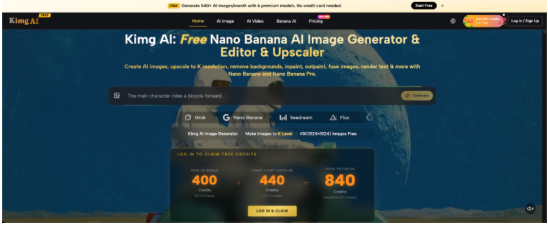
A stylist has a promising idea for a spring editorial: oversized tailoring, vintage accessories, and a surprising combination of soft colors. The problem is that nobody knows whether the pieces will look good together. Buying everything just to test the idea seems excessive, while describing the concept over messages leaves too much room for misunderstanding. This is where visual experimentation becomes useful. Platforms such as Kimg AI offer image-generation and editing options that can help creators explore the overall direction of a look before committing to a real wardrobe, location, or photoshoot.
The Outfit That Looks Perfect in Your Head
Fashion inspiration rarely arrives as a complete outfit. You notice an interesting jacket, remember a vintage advertisement, and suddenly imagine a look that combines both influences.
Translating that mental picture into an actual shoot is another matter.
A stylist may picture a relaxed linen jacket with dramatic trousers, but the photographer imagines structured tailoring. Meanwhile, the makeup artist expects a colorful editorial rather than something minimal.
Everyone agrees with the description, yet everyone sees something different.
Traditional mood boards help, although they often contain photographs from unrelated collections. A single board might combine different models, lighting conditions, seasons, and camera angles.
Those references communicate an atmosphere without necessarily showing how the intended elements work together.
A concept illustration offers another starting point. It allows the team to discuss one visual direction instead of interpreting a collection of loosely connected references.
The purpose is not to predict the finished photograph perfectly. It is to discover disagreements before they become expensive decisions.
Start With the Shape, Not the Shopping List
When people build outfits, they often begin with individual garments. They choose shoes, trousers, a jacket, and several accessories before considering the complete silhouette.
For editorial planning, reversing that order can help.
Start by describing the overall shape. Is the outfit narrow and elongated? Does it combine an oversized upper half with fitted trousers? Is the intended effect elegant, playful, dramatic, or deliberately unconventional?
Consider an imaginary photoshoot built around a relaxed summer suit. The first decision might be whether the jacket should look loose and informal or sharply tailored.
Only then should the stylist consider color, fabric texture, and accessories.
This prevents decorative details from distracting the team from the main visual direction.
A simple written brief might read: relaxed tailored outfit, wide-leg trousers, cream and muted orange palette, natural daylight, confident walking pose.
That description contains enough information to explore a concept without pretending that specific garments have already been sourced.
It also gives the stylist a useful checklist when selecting real clothing later.
Three Fashion Decisions Worth Testing Visually
Not every decision needs an AI-generated preview. The most useful experiments involve choices that could significantly change the appearance of the entire shoot.
- Color Combinations That Seem Risky
Some color combinations sound strange but look surprisingly effective in context.
Imagine pairing olive green tailoring with pale pink accessories. A stylist might hesitate because the colors feel unrelated when considered separately.
A visual experiment allows the combination to be judged as an outfit rather than as two isolated swatches.
Compare it with a more conventional alternative under similar lighting.
The goal is not to establish scientifically accurate fabric colors. Digital illustrations cannot reliably predict how physical materials will appear under studio lights.
Instead, use the comparison to decide whether an unusual palette deserves a real-world fitting.
- Styling One Hero Piece in Different Ways
A single statement garment can support several completely different stories.
Imagine a metallic silver jacket. In one direction, it becomes part of a futuristic editorial with clean styling and structured trousers.
In another, it appears with casual denim and a simple shirt.
Both approaches may work, but they communicate different personalities.
Testing those directions before the shoot helps the stylist choose appropriate supporting pieces.
It also prevents the team from gathering accessories that belong to competing concepts rather than one coherent look.
- Matching Clothing to the Setting
An outfit can look impressive against a plain studio background and less convincing in a busy environment.
Consider a pale, flowing dress intended for an architectural street photograph.
The surrounding buildings, pavement, and lighting can change how the design reads.
A concept scene can help reveal whether the clothing remains visually distinct from its surroundings.
Compare a restrained architectural background with a colorful urban setting.
The preferred option should support the clothes instead of competing with them.
Once selected, the team can investigate practical locations that produce a similar atmosphere.
Using Reference Images to Explore a Fashion Direction
A fashion concept becomes easier to communicate when the creator has an existing photograph or clear visual reference.
For example, a stylist might have permission to use a photograph of a jacket and want to explore how its general appearance could work in different editorial settings.
With Nano Banana AI, creators can experiment with image generation and reference-based editing, including visual style transformations.
Begin with a specific question. Would the jacket suit a softly lit café editorial or a dramatic architectural setting?
Describe the desired visual treatment without changing everything simultaneously.
Review the results for unexpected details, particularly garment proportions, seams, accessories, and materials. Generated images may invent features that do not exist in the original piece.
Keep the original reference beside the experiment so the stylist can distinguish real garment information from visual speculation.
The output is most useful as a discussion aid.
A professional fitting, genuine product measurements, and actual fabric samples remain necessary before production.
Where Concept Testing Helps and Where It Falls Short
Visual experimentation can reduce uncertainty, but it does not eliminate production work.
A generated image may depict a beautifully draped coat whose real fabric behaves differently. It might show trousers that appear perfectly tailored despite an impractical cut.
The team should therefore separate conceptual questions from physical ones.
| Question | Suitable approach |
| Does this color direction feel interesting? | Visual concept comparison |
| Will the garment fit the model? | Actual fitting |
| Does this setting suit the outfit? | Concept image and location research |
| How does the fabric move? | Physical sample or real footage |
| Which overall mood suits the story? | Editorial visual references |
These distinctions prevent generated imagery from becoming a substitute for evidence.
They also help teams spend their attention wisely. If a preview confirms that a color palette deserves consideration, the next step is to test it with genuine fabrics rather than generate endless variations.
Turning the Chosen Concept Into a Practical Shoot Plan
Once the team agrees on a visual direction, the concept needs to become a useful production document.
Write down the essential elements: silhouette, dominant colors, styling references, location requirements, lighting mood, and intended poses.
Identify what is flexible. A particular chair or background detail might be optional, while the oversized jacket silhouette is central to the idea.
Then separate items the team already owns from those that must be borrowed, rented, purchased, or made.
This is also the right moment to check availability and realistic alternatives.
If an exact garment cannot be sourced, focus on matching the important shape and mood rather than copying every detail of a generated image.
Share the approved concept alongside practical photographs of the actual clothing.
That combination gives the photographer and styling team both creative direction and reliable production information.
Finally, allow room for discoveries during the shoot. Sometimes the best photograph emerges when a real model, garment, and location interact in an unexpected way.
Conclusion
Testing a fashion concept before a photoshoot is not about replacing stylists, models, or photographers. It is about making early discussions more concrete and helping teams identify the strongest direction. Visual experiments can clarify silhouettes, color combinations, and settings, while actual garments and fittings determine what is physically achievable. A useful concept should guide decisions without pretending to be a finished photograph. Before planning your next editorial, choose one uncertain styling decision and explore two contrasting visual treatments. The comparison may reveal which idea truly deserves a place in front of the camera.