

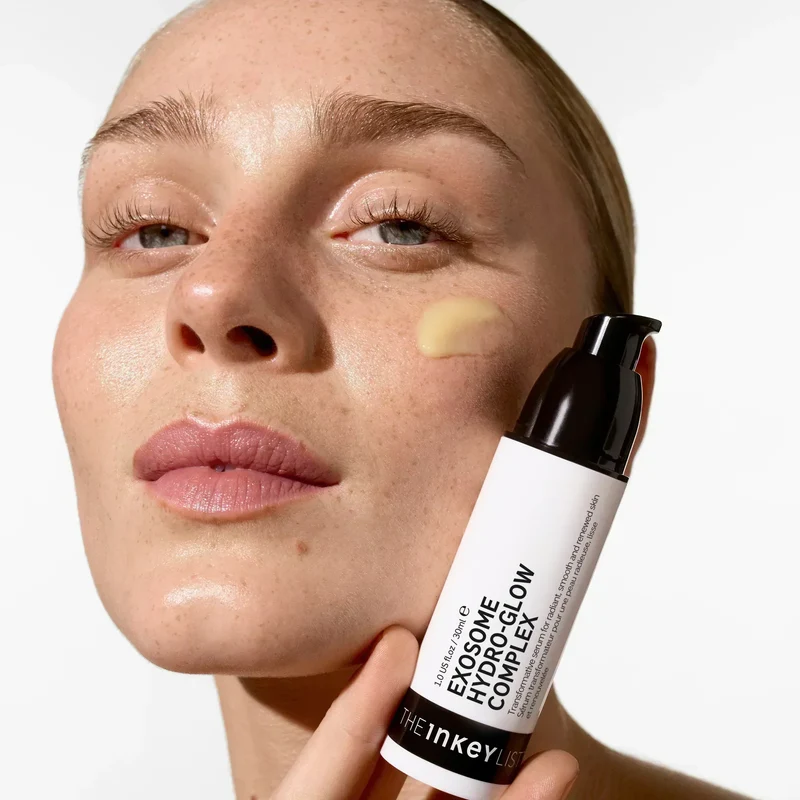
An ingredient list that includes exosomes can raise as many questions as it answers. What material is present? How was it measured? Does it remain stable in the formula? And what has been demonstrated in people using the product? The question “how do exosomes work?” is a useful scientific starting point, while formulation and testing determine whether a particular cosmetic claim is credible.
Start with a Precise Ingredient Description
The term exosome is frequently used in beauty marketing, although the wider scientific category is extracellular vesicles (EVs). Researchers distinguish vesicle populations by their origin and physical or biochemical features. Consensus guidance cautions against calling every small EV an exosome without evidence of its formation pathway.
For the question “How do exosomes work?” to be useful in product development, suppliers must identify the source organism or cell type, processing method, and contents of the delivered material. A particle-containing filtrate may have different characteristics from a purified EV fraction. A high particle count alone does not establish potency or purity.
What Does Meaningful Characterization Include?
Useful documentation may describe particle size distribution, particle concentration, markers or other composition measurements, and checks for non-vesicular contaminants. The appropriate methods depend on the source and preparation. No single laboratory measurement proves all characteristics of an EV-based ingredient.
Documentation should specify which test methods were used and whether the reported values concern the raw ingredient or finished product. For quality assurance, reproducible measurements across batches are particularly valuable.
What Particle Counts Leave Unanswered
A reported particle concentration cannot, on its own, answer the question “How do exosomes work?” even if it makes a technical specification look persuasive. However, counting nanoscale particles does not necessarily distinguish intact vesicles from protein aggregates, debris, or other structures of similar size. Different instruments also have different measurement ranges and limitations. A useful characterization package explains which analytical methods were used, what they can detect, and whether several independent measurements support the interpretation.
Potency is a separate question. Even if a batch contains well-characterized vesicles, the amount of a proposed biological cargo may vary, and the relevance of that cargo to a cosmetic outcome has to be investigated. Suppliers can strengthen documentation by defining batch-release criteria and showing how identity, purity, and consistency are assessed over time. A consistent particle count is useful quality information when interpreted alongside those additional measures.
Stability Is a Formulation Question
Processing and storage
Temperature, freeze-thaw history, concentration, and processing steps can influence biological particle preparations. An ingredient studied immediately after isolation may behave differently after extended storage. A usable specification should describe handling conditions and an appropriate period of stability.
Compatibility with the final formula
Water content, pH, surfactants, preservatives, and other ingredients may influence a complex dispersion. Product developers need evidence that the relevant characteristics persist in the actual skincare formula and packaging. Stability testing should support the product’s claimed shelf life.
How Do Exosomes Work in a Finished Serum?
Formulating with a vesicle-containing ingredient introduces exposure to other materials and manufacturing steps. Mixing intensity, processing temperature, pH adjustment, emulsification, and the presence of surfactants or preservatives may alter the characteristics of a biological particle preparation. Developers should establish what physical or functional attributes matter and test them after the ingredient has been incorporated into the final formula. Results from the supplier’s stock dispersion alone do not settle this question.
Packaging and shelf life also affect the product that reaches the user. Light exposure, contact with packaging components, and repeated opening can influence some formulations. Stability plans can include checks at defined time points, under realistic storage conditions, and after foreseeable temperature excursions. For products intended for direct skin application, microbiological quality and user tolerability are separate requirements that remain important regardless of any vesicle-related research.
How Do Exosomes Work? Three Levels of Supporting Evidence
Laboratory mechanisms
Cell-culture assays can suggest that a preparation influences a biological pathway. These results are valuable for discovering possible mechanisms, but they do not demonstrate a visible improvement after everyday topical application.
Preclinical skin studies
Models involving animals, engineered skin, or experimentally damaged tissue can help explore delivery and tissue responses. Interpretation should account for how closely the model matches intact human skin.
Human cosmetic outcomes
Human studies can assess hydration, appearance, tolerability, and other outcomes under realistic use conditions. Study design matters: sample size, controls, duration, application method, and whether measurements were objective and prespecified.
Interpreting Consumer-Facing Study Outcomes
A claim such as improves the appearance of dry skin can be evaluated differently from a claim about tissue regeneration. Good cosmetic trials state who participated, how long they used the product, whether a control was included, and how changes were measured. Photographs should use consistent lighting and positioning; instrumental measures should be recorded with appropriate methods. Self-reported comfort can add useful information, especially when presented alongside objective findings rather than as proof of a cellular mechanism.
Statistical significance should also be considered alongside the size of the observed effect. A small difference in a laboratory measure may have little visible impact, while a formulation with a strong moisturizing base may improve comfort regardless of the experimental ingredient. Separating the performance of the complete formula from a mechanism proposed for one component helps brands write precise claims. Clear communication protects the credibility of emerging research and makes product comparisons more useful to buyers.
During product development, a useful discipline is to connect every proposed claim to a named measurement. A hydration claim calls for a defined instrument and assessment schedule. A visible-texture claim calls for consistent photography or an appropriate grading method. Establishing these details before the study begins helps researchers interpret results and reduces the temptation to select only favorable outcomes after testing.
Avoid Overstating Regulatory or Clinical Claims
An explanation of “How do exosomes work?” should not become a claim that a skincare product treats disease, regenerates tissue, or has authorization for a medical indication without appropriate supporting evidence and regulatory approval. Rules depend on jurisdiction and on what the product claims to do. Suppliers and brands should review both the ingredient and the final marketing language.
A More Useful Ingredient Review
A sound evaluation connects five elements: documented source, reliable characterization, suitable manufacturing controls, finished-formula stability, and human evidence for the proposed cosmetic outcome. Together, these details help separate an emerging area of skin science from conclusions that the available evidence cannot yet support.