

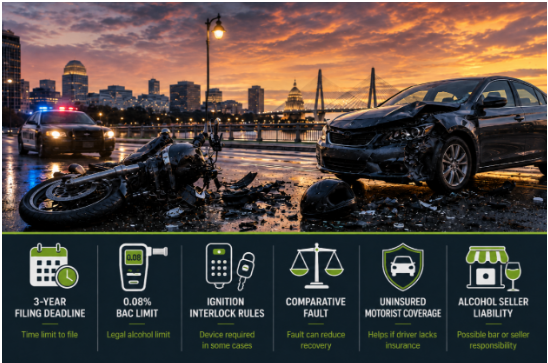
South Carolina’s drunk driving laws can affect everything from filing deadlines and insurance coverage to fault and possible alcohol seller liability.
When an impaired driver causes a crash, the harm can feel especially difficult to accept because the collision was preventable. A Charleston drunk driving accident attorney can help you move from confusion toward a clearer plan by identifying who may be responsible, preserving evidence, communicating with insurers, and evaluating the full effect of the crash on your life.
For you or your family, the legal case is not only about a damaged vehicle or immediate medical bills. It may also involve continuing treatment, missed work, emotional trauma, physical pain, and long-term changes that follow a serious injury. Monge & Associates’ Charleston practice emphasizes helping injured people address both the financial and personal consequences of a motor vehicle crash.
Why Drunk Driving Cases Require Focused Attention
Alcohol-related collisions often call for a deeper investigation than a routine insurance claim. Police reports, witness statements, available video, alcohol-testing evidence, medical records, vehicle damage, and crash-scene information can help show how the collision happened and whether impairment contributed to it.
South Carolina law makes it unlawful to drive with an alcohol concentration of 0.08 percent or higher. The state also uses ignition-interlock requirements in connection with certain DUI, driving-with-an-unlawful-alcohol-concentration, and felony DUI license suspensions, reflecting a broader effort to reduce impaired driving.
An investigation may sometimes extend beyond the impaired driver. South Carolina law prohibits licensed beer and wine sellers from selling alcohol to an intoxicated person. Since January 1, 2026, state law also provides that licensed liquor sellers may not knowingly sell liquor to a person in an intoxicated condition. These rules do not automatically make a business responsible whenever a customer later causes a collision, but alcohol-service evidence may deserve careful review when the circumstances support it.
Building A Claim Around Your Real Losses
A meaningful injury claim should reflect what the crash has actually taken from you. Some losses are easy to put a number on, such as medical bills, rehabilitation costs, future treatment, and damage to your vehicle. Others are harder to measure. Ongoing pain, stress, and changes to your normal routine can affect your life long after the immediate expenses are paid. The firm’s Charleston materials specifically recognize both economic and non-economic losses when evaluating potential compensation.
Insurance companies may still dispute how the collision occurred, the seriousness of an injury, the necessity of treatment, or the value of future losses. South Carolina also recognizes comparative fault in automobile cases, making evidence especially important if another party tries to place some responsibility for the crash on you.
A good legal strategy looks beyond the insurance company’s first offer. Medical records, work details, photos, witness accounts, and the changes you have faced in daily life can all help show how deeply the accident has affected you.
Deadlines And Insurance Can Shape Your Case
Deadlines are another important part of the claims process. In South Carolina, that is usually three years for a personal injury case, but the deadline is not always the same in every situation.
Waiting can also create problems long before the legal deadline arrives. Video may be deleted, physical evidence can disappear, and witnesses may become harder to find. Early investigation gives an attorney a better opportunity to preserve material that could later become important.
Insurance coverage creates another potential complication. The impaired driver may carry limited insurance or no liability insurance at all. South Carolina automobile liability policies include uninsured-motorist protection, which can become relevant when an at-fault driver is uninsured or when a hit-and-run driver cannot be identified. A careful review can uncover other insurance coverage or responsible parties that may also have a role in paying for your losses.
South Carolina Efforts To Prevent Drunk Driving
Legal action can help you deal with the damage already done, while prevention programs are aimed at stopping another impaired driver from causing the same kind of harm. The South Carolina Department of Public Safety operates Sober or Slammer, a public education and enforcement campaign designed to discourage drunk and impaired driving. State and local law enforcement agencies also participate in periods of increased DUI enforcement and public-safety checkpoints.
For victims, assistance may extend beyond an insurance claim or lawsuit. South Carolina’s Department of Crime Victim Compensation considers applications involving traffic offenses including DUI, felony DUI, hit-and-run, leaving the scene, reckless driving, and reckless homicide. Eligibility depends on the individual circumstances, but the program provides another resource that victims and families may explore while dealing with the financial effects of a serious crash.
A Legal Approach Centered On Your Recovery
Legal representation should reduce uncertainty rather than add to it. Monge & Associates describes its client philosophy through a “Platinum Rule,” centered on treating injured people with the level of care that friends or family would want during a serious life challenge. The firm also emphasizes personalized attention, communication throughout a case, preparation for negotiation or trial, and a contingency-fee structure in which attorney fees are not charged unless compensation is recovered.
For you and your family, consultation can provide a clearer understanding of evidence, insurance coverage, possible responsible parties, deadlines, and losses that should be documented before important decisions are made. The firm reports prior results that include a $500,000 recovery in a case involving serious injuries caused by a hit-and-run drunk driver, although every case depends on its own facts and no past result guarantees another outcome.
Learning more about Scott Monge Attorney and the philosophy behind Monge & Associates can be a practical first step toward tailored advocacy focused not only on pursuing accountability, but also on helping you regain stability after a preventable Charleston drunk driving crash.
Frequently Asked Questions
What should you do after a drunk driving accident in Charleston?
Seek medical attention, report the crash to law enforcement, take photos if possible, gather witness information, and keep records of your expenses and treatment. It is also wise to avoid giving detailed statements to an insurance company before understanding your rights.
How long do you have to file a drunk driving accident claim in South Carolina?
Many South Carolina personal injury claims have a three-year filing deadline. However, the time limit can vary depending on the circumstances, so it is important to review the case as early as possible.
What compensation may be available after a drunk driving crash?
Compensation may include medical expenses, rehabilitation costs, lost income, property damage, future treatment, pain, emotional distress, and other losses connected to the accident.
What if the drunk driver does not have enough insurance?
Other sources of coverage may be available. Uninsured or underinsured motorist coverage and, in some situations, insurance connected to another responsible party may help cover your losses.
Can a bar or alcohol seller be responsible for a drunk driving accident?
Possibly. South Carolina has laws restricting alcohol sales to intoxicated people. Whether a business can be held responsible depends on the specific facts and evidence surrounding how the driver obtained alcohol.
What evidence can help support a drunk driving accident claim?
Useful evidence may include the police report, alcohol-testing results, medical records, photographs, witness statements, video footage, employment records, and documentation showing how the injuries have affected your daily life.
Can you still recover compensation if you were partly responsible for the crash?
Possibly. South Carolina follows comparative fault rules, so your ability to recover compensation can depend on the degree of responsibility assigned to each person involved.
Why should you speak with a lawyer before accepting an insurance settlement?
An early offer may not account for future medical care, lost earnings, ongoing pain, or other long-term effects of the accident. A legal review can help you understand whether the offer fairly reflects the losses you have experienced.