

Wall art can change the mood of a room long before anyone notices the furniture, lighting or smaller décor pieces. A peaceful devotional image can make a space feel grounded, while artwork showing movement and open landscapes can make it feel more energetic.
This is one reason spiritual and Vastu-inspired paintings remain popular in Indian homes. They are chosen not only for how they look but also for the meaning people associate with them. Images of deities, lotus flowers, sacred symbols, running horses and natural elements are often used to create a particular feeling within a room.
However, choosing such artwork should not be based on symbolism alone. The painting also needs to work with the room’s purpose, size, colours and existing interior style. A piece that looks beautiful in a large showroom may feel overwhelming in a compact pooja room, while a small painting may disappear on a wide living-room wall.
The right approach is to balance personal belief, visual appeal and practical placement.
Begin with the Purpose of the Room
Before choosing a painting, think about what usually happens in the room.
A pooja room or prayer corner is used for quiet reflection and devotional rituals. Artwork for this space should support a calm and focused atmosphere. Images of deities, sacred symbols and traditional spiritual scenes tend to feel natural here.
The living room has a different purpose. It is usually more social and open, so it can hold artwork with stronger movement, wider compositions and more visual energy. Paintings featuring running horses, landscapes, trees or sunrise scenes often suit this kind of space.
A bedroom may need softer and more restful artwork, while an office or study can accommodate imagery associated with focus, progress and determination.
Choosing the room first prevents you from buying artwork based only on a popular belief and then trying to fit it into an unsuitable place.
Understand the Difference Between Spiritual and Vastu-Inspired Art
Spiritual artwork and Vastu-inspired artwork sometimes overlap, but they are not exactly the same.
Spiritual art is usually connected with devotion, faith, meditation or a personal sense of peace. It may include paintings of Goddess Durga, Krishna, Ganesha, Buddha, Shiva or other sacred figures.
Vastu-inspired art is often chosen according to traditional ideas about energy, movement, direction and balance within the home. Common examples include seven running horses, rising suns, flowing water, lotus flowers and certain natural landscapes.
These associations come from cultural and traditional beliefs. Artwork should not be treated as a guaranteed way to change personal or financial outcomes. It is better to choose a painting that holds meaning for you and also creates a positive visual atmosphere.
Choose Devotional Art for a Prayer Space
The pooja room is generally the most suitable place for devotional paintings.
When selecting a deity image, pay attention to the expression, posture and overall composition. A calm and balanced image can help maintain the peaceful character of the prayer space. Highly dramatic backgrounds or crowded compositions may feel too intense in a small room.
A durga painting for pooja room can bring a sense of strength, protection and devotion to the space. Choose a size that remains clearly visible without overpowering the idols, lamps and other sacred objects placed nearby.
Traditional shades such as red, gold, orange and green can complement wooden or temple-style pooja units. For a modern prayer corner, a painting with softer colours and a simpler frame may blend more naturally with the rest of the interior.
Leave some open space around the artwork. Filling every part of the wall with photographs, shelves and decorative items can make the prayer area feel visually crowded.
Use Symbolic Art to Bring Energy into the Living Room
The living room can hold artwork with a broader and more dynamic composition.
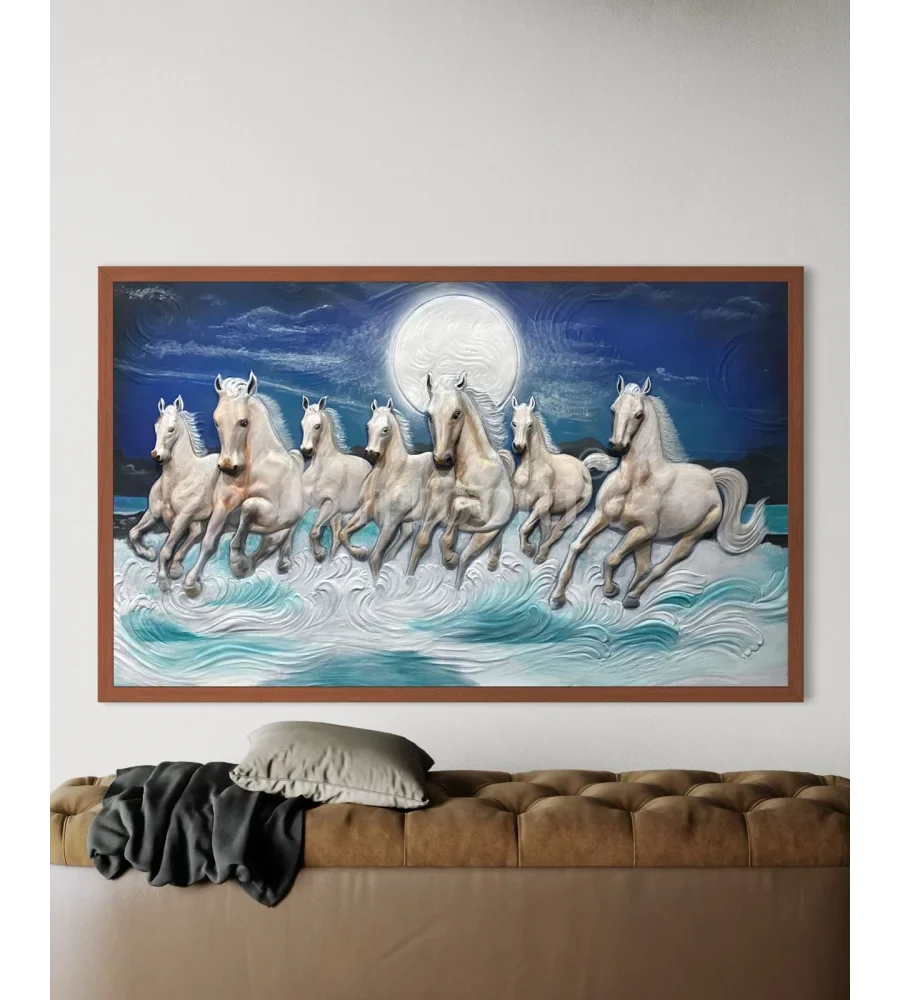
Paintings of running horses are a popular Vastu-inspired choice because they are commonly associated with movement, progress, confidence and forward momentum. Their horizontal composition also works well above a sofa, console table or low cabinet.
A large horse painting for living room can become the main focal point of the room, especially when the surrounding furniture is simple. The movement within the artwork can make a quiet wall feel more active and expansive.
Look closely at the background before making a choice. Paintings with open skies, water, mountains or sunrise colours may create a softer look, while darker backgrounds and dramatic clouds can make the artwork feel more intense.
The horses should appear confident and coordinated rather than distressed or scattered. Even without considering symbolism, this creates a more visually balanced composition.
Consider Direction Without Ignoring Design
Many homeowners consider wall direction while displaying Vastu-inspired art. Different traditions and advisers may suggest different placements, so there is not always one universally accepted answer.
Instead of relying on direction alone, also consider how the artwork looks within the actual room.
For example, a painting of running horses should ideally lead the eye into the room rather than towards an empty corner. If the horses appear to move directly towards a doorway, the composition may feel as though it is visually leaving the space.
Similarly, devotional artwork should be placed where it can be viewed comfortably during prayer. Avoid positioning it too high, behind clutter or in an area with harsh glare.
Traditional placement preferences can guide the decision, but practical visibility and visual balance matter just as much.
Select the Right Artwork Size
Size is one of the most important yet frequently overlooked factors.
A small painting above a wide sofa can appear disconnected. A large painting inside a compact pooja room may dominate everything around it.
Before buying, measure the available wall. Use masking tape to outline the approximate dimensions and then view the shape from different parts of the room.
Above a sofa or console, the artwork should relate to the width of the furniture below it. One large horizontal canvas often works better than a small frame floating alone in the middle of the wall.
In a prayer area, leave enough room for other devotional objects. The painting should feel like part of the arrangement rather than covering the entire background.
Match the Colours with Your Interior
Spiritual art is often rich in red, orange, blue, green and gold. Vastu-inspired artwork may contain white horses, open skies, water, sunlight and earthy landscapes.
You do not need to match every colour in the painting with your furniture. Instead, repeat one or two shades through smaller elements such as cushions, rugs, lamps or decorative accessories.
A red and gold Durga painting can connect naturally with brass lamps or warm wooden finishes. A horse painting with blue skies may work with grey, beige or navy upholstery.
If the room already contains several patterns and colours, choose a painting with a calmer background. If the room is mostly neutral, a bolder artwork can provide the missing personality.
Think About Lighting
Lighting can completely change the way spiritual artwork appears.
Warm lighting generally works well around devotional paintings because it creates a softer and more welcoming atmosphere. However, the light should not be so close that it produces glare or casts strong shadows across the image.
Mirror-finished frames and glossy canvases need careful placement. Direct sunlight may create reflections and can also affect some materials over time.
For a living-room feature wall, a soft picture light can highlight the artwork in the evening. Natural daylight is also useful, provided it does not fall too harshly on the surface.
Observe the wall during the morning, afternoon and night before deciding on the final position.
Avoid Overcrowding the Wall
Spiritual and symbolic art usually has a strong visual presence. It does not need several unrelated items around it.
Placing clocks, shelves, family photographs and multiple wall decorations beside a devotional painting can reduce its impact. The same is true for a large seven-horse canvas.
Allow the artwork to breathe. A clean wall with one meaningful painting often feels more thoughtful than a wall filled with several objects.
When browsing Artociti, comparing traditional deity paintings, canvas artwork and dimensional wall pieces can help you understand which format works best for each room. The decision becomes easier when you consider where the artwork will actually be displayed rather than looking at the design in isolation.
Let Personal Connection Guide the Final Choice
Symbolism can help you shortlist options, but personal connection should guide the final decision.
You may prefer a particular Durga painting because its expression feels peaceful, or you may like a horse composition because its colours remind you of an open landscape. These personal reactions matter.
Wall art becomes part of your everyday surroundings. You will see it during ordinary mornings, family gatherings and quiet evenings. It should continue to feel meaningful even after its newness fades.
Choose artwork that reflects your beliefs and taste rather than purchasing something only because it is considered popular or traditionally recommended.
Conclusion
Choosing spiritual and Vastu-inspired wall art is about more than following placement rules. The artwork should suit the room’s purpose, available space, colour palette and emotional atmosphere.
A devotional painting can make a pooja room feel more focused and personal, while a dynamic horse composition can add movement and character to a living room. Consider the direction and traditional symbolism, but also pay attention to size, lighting and the way the painting relates to nearby furniture.
Measure the wall, compare a few suitable designs and imagine how each one will feel during everyday life. Once you find artwork that looks balanced, holds personal meaning and feels naturally connected to the room, take the next step and choose the piece that genuinely belongs in your home.