

Edmontonians are no strangers to extreme weather. While our winters demand the absolute best from our heating systems, our summers have increasingly brought intense, multi-day heatwaves. When July and August roll around, temperatures can skyrocket past 30°C, turning your home from a comfortable sanctuary into a stifling greenhouse. During these peak summer days, your central air conditioning system works harder than at any other time of the year.
Unfortunately, this extreme stress is precisely when central air systems are most likely to fail. An AC breakdown during an Alberta heatwave is more than just an inconvenience—it is an uncomfortable and potentially unsafe emergency for children, seniors, and pets. Understanding why these systems fail and taking proactive, preventative steps can mean the difference between a cool, relaxing summer and a desperate scramble for emergency repairs.
The Hidden Stressors: Why Summer Heat Destroys AC Units
To protect your system, it helps to understand exactly what happens to an air conditioner when the outdoor temperature climbs. Your AC does not actually “create” cold air; rather, it absorbs heat from inside your home and dumps it outdoors. This thermodynamic process relies on a delicate balance of airflow, pressure, and electrical energy.
When outdoor temperatures spike, the temperature differential between the indoor air and outdoor air grows significantly wider. The system must run longer cycles to reach your thermostat’s target temperature. This constant operation causes several issues:
- Electrical Strain: Components like the capacitor (which starts the motor) and the contactor (which switches power) are forced to handle continuous electrical loads in high ambient heat.
- Thermal Friction: The compressor, the heart of your cooling system, runs continuously, causing internal lubricating oils to break down faster.
- Airflow Bottlenecks: Any minor restriction in your system—like a dusty filter or a dirty outdoor coil—is magnified under heavy use, forcing the equipment to work twice as hard to move the same amount of heat.
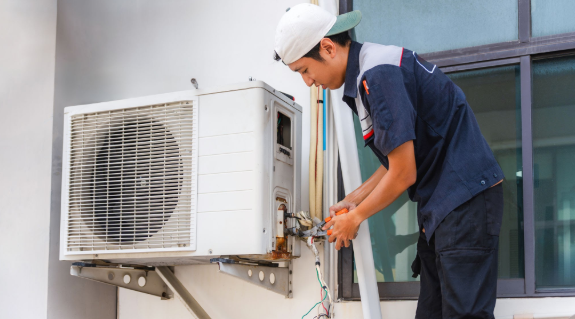
If your system suffers an unexpected malfunction under these severe conditions, it is critical to reach out to experienced professionals who specialize in air conditioner repair in Edmonton to diagnose electrical faults, failing compressors, or complex refrigerant leaks before they completely destroy your unit.
1. The Simplest Guardrail: Change Your Air Filters Constantly
The single most common cause of a summer AC breakdown is a dirty air filter. It sounds too simple to be true, but a clogged filter is devastating to mechanical cooling equipment.
When air cannot pass freely through your furnace or air handler filter, the indoor evaporator coil does not get enough warm air passing over it. Without that warmth, the cold refrigerant inside the coil drops below freezing temperatures. The moisture in your home’s air then condenses onto the freezing coil and instantly turns to ice.
Once your AC coil freezes into a solid block of ice, it completely blocks all airflow. Your home will rapidly warm up, and the ice can melt destructively, dripping water directly into your furnace’s internal electronics. During high-use summer months, check your filter every 30 days. If you have pets or high dust levels, swap it out immediately rather than waiting for the typical three-month mark.
2. Clear and Clean the Outdoor Condenser Unit
Your outdoor unit—the condenser—is responsible for releasing the heat collected from inside your house. If the metal fins surrounding the unit are clogged with dirt, lawn clippings, cottonwood seeds, or overgrown landscaping, that heat gets trapped.
When the condenser cannot shed heat efficiently, the internal pressures within the refrigerant lines rise dangerous high. This forces the compressor to pull more electrical current to push through the resistance, eventually triggering an internal thermal overload switch or burning out the motor entirely.
| Clear the Area | Hose it Down | Straighten the Fins |
| Maintain a 2-foot (60 cm) clear perimeter around the unit. Cut back shrubs, weeds, and long grass. | Shut off the AC power and gently spray the coils from top to bottom with a garden hose to wash away dirt. | Carefully use a fin comb if the delicate aluminum fins have been bent by hail, rocks, or yard equipment. |
Warning: Never use a pressure washer on your outdoor AC unit. The high-pressure stream will instantly bend and crush the fragile aluminum cooling fins, permanently ruining your unit’s ability to release heat.
3. Manage Your Thermostat Intelligently
It is a common misconception that setting your thermostat to 16°C (60°F) will make the house cool down faster. Air conditioners run at one steady speed. Setting an unrealistically low temperature simply forces the system to run uninterrupted for hours on end, pushing mechanical components past their safe operating limits.
Instead, practice strategic thermostat management during Edmonton heatwaves:
- Aim for Realism: Set your thermostat between 22°C and 24°C when you are home. Every degree lower increases your energy consumption and equipment stress by roughly 3% to 5%.
- Avoid Constant Over-Adjusting: Cranking the temperature up and down constantly forces the system to work harder to overcome thermal mass (the heat stored in your walls, furniture, and flooring). Pick a comfortable temperature and leave it.
- Use Smart Features Wisely: If you use a programmable thermostat, do not let your home warm up by more than 4°C while you are away at work. Forcing an AC to lower a house’s temperature from 28°C back down to 22°C during the hottest part of the afternoon can easily trigger a system failure.
4. Reduce Your Home’s Thermal Load
You can drastically reduce the physical burden on your air conditioner by preventing heat from entering your home in the first place. The less heat your home absorbs, the fewer hours your AC has to run.
Block the Radiant Heat
Keep your blinds, curtains, or window coverings completely closed, especially on windows facing south and west. Direct sunlight piercing through modern window glass creates a powerful greenhouse effect that forces your cooling system into overdrive.
Delay Heat-Generating Indoor Activities
Major appliances generate incredible amounts of internal residual heat and ambient humidity. Avoid using your oven, stove, dishwasher, or clothes dryer during the hottest hours of the day (typically between 11:00 AM and 7:00 PM). Instead, cook meals outdoors on a barbecue, prepare cold dishes, and run laundry appliances late in the evening when outdoor temperatures drop.
5. Recognize the Early Red Flags of System Failure
Air conditioners rarely experience catastrophic failure without warning. Most emergency breakdowns are preceded by subtle signs that homeowners overlook. Catching these early indicators allows you to schedule a standard service visit before the equipment quits entirely on a 32°C afternoon.
Short-Cycling
If your AC turns on for two or three minutes, shuts off, and then turns back on a few minutes later, it is short-cycling. This behavior places immense wear on the compressor and starter components, and is often caused by overheating, electrical faults, or a failing sensor.
Lukewarm Air or Reduced Airflow
Place your hand over your supply vents. The air should feel crisp, dry, and distinctly cold. If the airflow feels weak or the air is merely room temperature, your system may be struggling with a failing blower motor, a blocked duct, or a critical low refrigerant charge.
Bizarre, Unfamiliar Noises
While a gentle hum and the rush of air are completely normal, loud mechanical sounds are an immediate cause for concern:
- Squealing or Screeching: Often points to a failing bearings in the condenser fan motor or a slipping belt.
- Clanking or Banging: Indicates a loose mechanical component, a broken fan blade, or a severe internal compressor issue.
- Hissing or Bubbling: A textbook sign of a high-pressure refrigerant leak escaping into your home or the outdoor air.
Don’t Wait for the Breakdown
Preventing an emergency cooling failure requires a mix of basic regular homeowner maintenance, mindful energy habits, and professional mechanical attention. By checking your filters, keeping your outdoor unit clean, reducing solar heat gain, and listening closely for early warning signs, you can protect your financial investment and ensure your household stays perfectly cool all summer long. Consistently monitoring your cooling equipment preserves your peace of mind when Alberta’s summer weather is at its absolute peak